
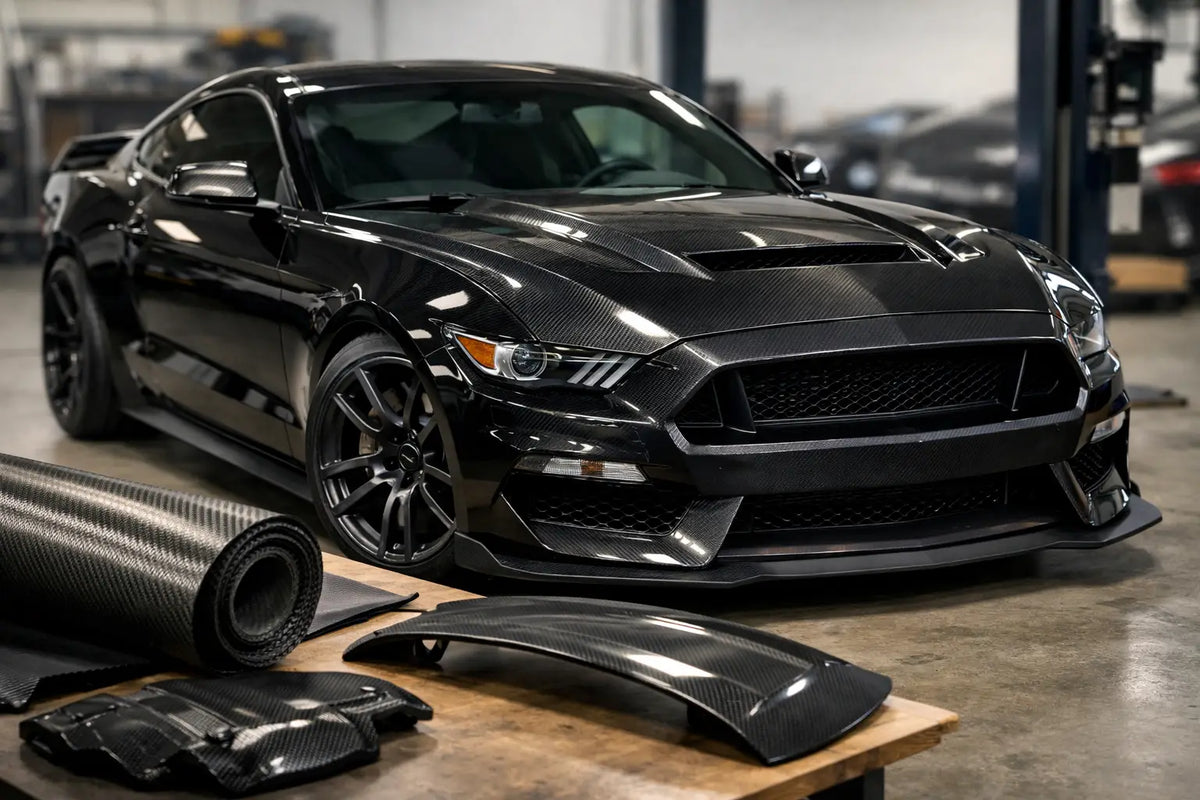
A carbon bonnet on a Mustang looks the part in the paddock, but the wrong panel gaps, poor weave alignment or bargain-bin resin finish will ruin the whole car faster than any set of wheels ever could. This Mustang carbon fibre guide is for owners who want more than surface-level style - the people building cleaner, lighter, sharper cars with parts that actually suit the platform.
The truth is simple. Carbon fibre on a Mustang can be a smart upgrade, a visual upgrade, or both. Which one it becomes depends on the part, the quality of the manufacturing, and how honest you are about what you want from the car.
What carbon fibre really does on a Mustang
Carbon fibre has earned its reputation for a reason. Done properly, it reduces weight, adds stiffness in the right applications, and gives the car a motorsport edge that painted plastic simply cannot fake. On a Mustang, that matters because it is a platform that responds well to reducing mass, especially higher up on the car.
That said, not every carbon part delivers the same result. A genuine weight-saving bonnet or boot lid can make a noticeable difference to the way the car feels, particularly during direction changes and heavy braking. Interior trim pieces, mirror caps and dress-up panels are different. They bring visual impact, but they are mostly about finish, detail and cabin atmosphere rather than lap time.
That is not a criticism. A proper build is about balance. Some owners want every kilo they can remove before the next track day. Others want a road car that looks tighter, more focused and less factory. Both are valid. The mistake is treating all carbon parts as if they serve the same purpose.
Mustang carbon fibre guide - choosing parts by priority
If your goal is performance first, start with the parts that sit high on the vehicle or replace heavier factory items. A carbon bonnet is the obvious example. Reducing weight over the nose can help the car feel more eager on turn-in, and it also changes the visual attitude immediately. A carbon boot lid can help for similar reasons at the rear, although the effect depends on the specific model and what the standard panel weighs.
Splitters, side skirts and diffusers sit in a different category. These are usually more about aero behaviour, styling and platform presence, though construction quality still matters. On a fast road or track Mustang, a well-designed front splitter can contribute to front-end confidence, but only if it is shaped correctly and mounted properly. Carbon on its own is not magic. Design is what makes the difference.
Then there are the finishing parts - mirror covers, grilles, spoiler elements, steering wheel trims, dash inserts and seat backs. These upgrades sharpen the car visually and can make the whole build feel more complete. They are not major weight-saving items, but they can transform how premium and purpose-built the Mustang feels.
So the right buying order usually comes down to intent. If the car is track-led, focus on structural exterior panels and aero. If it is a road car with show-and-go ambition, blend one or two major exterior pieces with smaller details that tie the look together.
Exterior panels vs trim pieces
Exterior carbon panels demand far more from the manufacturer than trim pieces do. Fitment, resin quality, UV resistance, edge finishing and mounting point accuracy all need to be right. A bonnet that saves weight but needs constant adjustment is not a premium upgrade. It is a compromise.
Trim pieces are generally easier to install and lower risk, which makes them a good entry point for owners testing the waters. But even here, quality matters. Poor clear coat, cloudy resin and inconsistent weave can cheapen the whole cabin or exterior.
How to spot quality carbon fibre
Serious Mustang owners can usually tell within seconds whether a part has been made properly. The weave should be straight and consistent. The clear coat should be deep and even, not wavy or overly thick. Mounting points should look engineered, not hurried. Edges should be clean. If a part arrives looking like it needs finishing work before it can go near the car, it is not the standard you want.
There is also a difference between full carbon fibre construction and carbon-skinned parts. A carbon-skinned panel usually has a fibreglass or other base material with a cosmetic carbon layer over the top. That can still work well for styling applications, but it will not offer the same weight-saving potential as a properly engineered full carbon component.
This is where buyers need to be realistic. If the product is marketed as a lightweight motorsport-style upgrade, ask what the construction actually is. If it is mainly a styling part, say so and judge it on finish and fit. There is no issue with cosmetic carbon as long as it is sold honestly and bought with the right expectations.
Fitment is everything
A Mustang is a bold shape. That is exactly why poor fitment stands out so badly. Bonnet shut lines, bumper edges, wing interfaces and boot alignment all need to sit right. One uneven panel gap can make an otherwise serious build look unfinished.
Vehicle-specific development matters here. Parts produced from proper 3D scanning, CAD work and platform-led testing are in a different league to generic mould-based copies. Good carbon components should feel like they belong on the car, not like they are forcing the car to adapt around them.
Where carbon fibre makes the biggest difference
For most builds, the biggest visual return comes from the bonnet, front splitter, rear spoiler and side skirt package. Those areas define the stance of the car. Get them right and the Mustang takes on a far more aggressive, motorsport-led identity.
The biggest functional return usually comes from lighter major panels and properly designed aero components. Again, it depends on the build. A street-driven S550 or S650 used for weekend meets may benefit more from visual cohesion than from chasing marginal weight savings. A track-day car running sticky tyres, upgraded brakes and suspension will make better use of every kilo saved and every bit of front-end stability gained.
Interior carbon is often overlooked, but it can be one of the most satisfying upgrades if you spend a lot of time in the car. Steering wheel details, centre console trim and dash sections can bring the cabin closer to the feel of a more focused performance model. It is less about numbers and more about the experience every time you get behind the wheel.
Common mistakes Mustang owners make
The first is mixing too many carbon styles on one car. Gloss twill on the bonnet, forged carbon mirror caps, matte interior trim and a different weave on the spoiler can quickly look confused. Consistency matters.
The second is buying on price alone. Carbon fibre is one of those categories where the cheapest option often costs more in the end, whether through poor fit, faded finish, cracks around mounting points or simply replacing the part later.
The third is expecting every carbon part to improve performance. Some do. Some mostly sharpen the look. A strong build comes from knowing which is which.
Finally, owners often underestimate installation. Even a well-made part can disappoint if it is rushed into place. Test fitting, correct hardware, proper alignment and careful handling all matter. Carbon deserves patience.
Mustang carbon fibre guide - building a package that works
The best Mustang builds are not random collections of expensive parts. They are cohesive packages. Carbon should support the character of the car, not overpower it. If the Mustang already has a clean wheel and suspension setup, a bonnet and subtle aero package can be enough. If the build is more aggressive, with wider tyres, brake upgrades and track intent, more extensive carbon can make perfect sense.
This is also where brand selection matters. Specialist retailers and developers who understand the platform tend to curate better. They know which parts fit, which finishes last, and which products are made for drivers rather than social media alone. That is the difference between an accessory and an upgrade.
At 150 Performance, that distinction matters. Carbon fibre should not be treated as trim-shop theatre. It should be engineered, platform-correct and worthy of the badge it is fitted to.
There is no single perfect carbon recipe for every Mustang. A road car, a weekend toy and a track machine all ask for something different. But if you prioritise fitment, honest construction, consistent finish and parts that actually suit your goal, carbon fibre becomes more than a styling move. It becomes one of the clearest ways to give your Mustang sharper presence, stronger intent and a build quality you can see every time the light hits the weave.
Choose the parts with the same care you put into the rest of the car, and the result will look fast long before the engine even fires.
Share:
How to Reduce Mustang Front End Weight
Valved Exhaust vs Straight Pipe Explained