
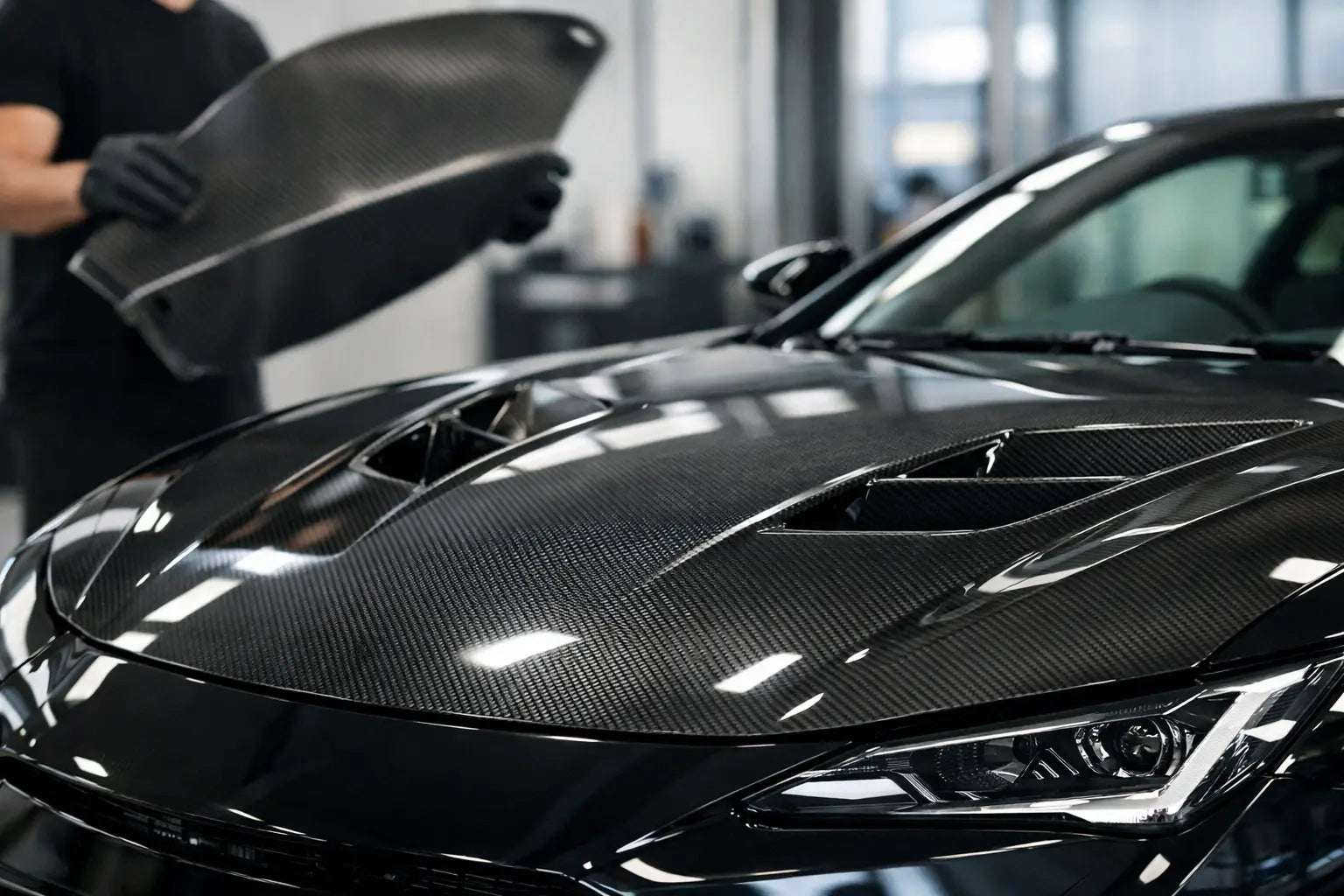
That first lift of a factory bonnet tells you a lot about a car. On many performance builds, especially front-heavy turbo platforms, it reminds you just how much weight sits over the nose. That is where lightweight carbon fibre bonnet benefits start to matter - not as a styling gimmick, but as a genuine upgrade for owners chasing sharper response, cleaner airflow management and a more focused motorsport look.
For the right build, a carbon fibre bonnet changes more than the view from the driver’s seat. It can alter how eagerly the car turns in, how planted the front end feels under braking, and how serious the whole package looks in the paddock or on the road. If you run a Focus ST, Focus RS, Mustang or another performance platform with real attention paid to setup, weight distribution and heat control, this is one of those parts that makes sense far beyond aesthetics.
Why lightweight carbon fibre bonnet benefits matter
A bonnet sits high on the car and right at the front. That makes it a valuable place to remove mass. Saving weight low down is useful, but saving weight from the nose and from a relatively high position can have a stronger effect on how the car feels in direction changes.
Reduce mass here and the steering can feel more alert. The front axle has less load to manage, which can help the car rotate with less reluctance, especially in quick transitions. On a road car you may describe it as a lighter, keener front end. On track, where every braking zone and turn-in point matters, the difference becomes easier to appreciate.
This is why serious enthusiasts look at carbon panels differently from dress-up parts. A properly engineered bonnet is one of the few exterior upgrades that can contribute to both the dynamic package and the visual identity of the car.
Less weight over the front axle
The biggest performance case for a carbon fibre bonnet is simple - weight reduction where it counts. Factory bonnets are usually steel or aluminium. Steel is durable and cost-effective, but it is not light. Swap that for a high-quality carbon fibre bonnet and you can remove a noticeable amount of weight from the front of the vehicle.
That matters most on cars that already carry a lot of mass ahead of the cabin. Turbocharged hot hatches, all-wheel-drive performance cars and V8-powered platforms all benefit when you trim front-end weight. The reduction will not transform a car into a race machine on its own, but it supports the same goal as lightweight wheels, better suspension and stronger brakes - making the whole package work harder with less inertia.
On a fast B-road or circuit, less front-end mass can improve turn-in confidence and reduce the feeling of the car leaning on the outside front tyre. It may also help under braking because there is simply less weight pushing forward at the nose. That does not replace proper chassis setup, but it complements it.
Sharper handling, not just a lighter car
This is where nuance matters. Lightweight carbon fibre bonnet benefits are not only about the number on a scales readout. They are about where the weight is removed from and what that does to balance.
A lighter bonnet can contribute to a more eager response when you pitch the car into a corner. The steering may feel cleaner on initial input. The front end may recover quicker in left-right transitions. For drivers who are sensitive to chassis behaviour, especially those already running quality tyres and suspension, these changes can feel worthwhile.
That said, expectations need to stay realistic. If the rest of the car is standard, tired or poorly aligned, a bonnet alone will not suddenly deliver razor-sharp dynamics. The best results come when the car already has a solid foundation - good geometry, healthy dampers, suitable spring rates and tyres that can exploit the reduced load.
Cooling potential and airflow control
Many carbon fibre bonnets are not just lighter versions of the original panel. They often incorporate vents, ducts or extraction channels. On a tuned or hard-driven car, that can be a major advantage.
Engine bays trap heat. Turbocharged engines create plenty of it, and repeated hard use only makes the issue worse. A vented bonnet can help hot air escape more efficiently, reducing heat soak and improving airflow through the bay. That can support more consistent intake temperatures, better thermal management around surrounding components and a less heat-saturated setup after repeated laps.
Again, design matters. A vented bonnet needs to be properly engineered, not simply cut for effect. Position, structure and airflow path all influence whether the bonnet genuinely helps or just changes the look. The best pieces are developed with function in mind, using real measurement and platform-specific design rather than universal styling cues.
The motorsport look is part of the appeal
Let’s be honest - appearance matters. Enthusiasts do not spend money on carbon fibre because they want their build to look anonymous. A carbon bonnet changes the whole character of a car. It gives the front end more intent, more edge and more visible purpose.
On the right build, it signals that the owner has gone beyond simple bolt-ons. It says the car has been thought through. Exposed weave, aggressive venting and a sharper profile all play into that motorsport identity that so many track-focused and modified road cars aim for.
But visual impact only works when the quality is there. Poor weave alignment, weak lacquer, bad fitment or cheap hardware ruin the effect immediately. Serious buyers know the difference. A premium carbon fibre bonnet should look precise, sit correctly and match the standard of the rest of the build.
Fitment and build quality make or break the upgrade
A carbon fibre bonnet is only a performance part if it fits and functions as it should. This is one area where buying the cheapest option often ends badly. Panel gaps, hinge alignment, latch compatibility and structural rigidity all matter.
A badly made bonnet can create frustrating install issues, vibration at speed or inconsistent shut lines. Worse still, it can compromise confidence when the car is driven hard. That is why proper development is critical. Bonnet design should take into account the original mounting points, latch system and the airflow demands of the platform.
For enthusiast cars that see fast road and track use, precision matters. The best carbon parts are designed with the same mindset as other serious performance components - measured properly, built consistently and finished to a standard that reflects the price.
What are the trade-offs?
There are some, and it is better to be clear about them. Carbon fibre bonnets are more expensive than standard replacement panels. If your goal is simply to tidy up a daily driver after minor damage, they may not be the most sensible route.
They can also require more care. Finish quality needs protecting, especially if the bonnet has exposed carbon that lives outside year-round. Depending on the product, washer jets, insulation or factory hardware may need modification or transfer. Some buyers also choose bonnet pins for added security on more aggressive setups, particularly on track cars.
Then there is the question of use case. If your car is mostly a commuter with no other supporting modifications, the value proposition is more about appearance than outright dynamic gain. If the car is a weekend machine, show build or track-focused project, the benefits become easier to justify.
Who benefits most from a carbon fibre bonnet?
Owners building cars with a clear performance direction get the most from this upgrade. That includes hot hatch drivers trying to reduce nose weight, track-day regulars managing heat and front-end response, and premium platform owners who want visible carbon with genuine engineering value behind it.
Ford enthusiasts are a perfect example. Focus ST and RS models respond well to weight reduction at the front, especially once power and braking loads start rising. Mustang builds can also benefit, not least because the bonnet is such a large panel and such a defining part of the car’s front-end presence.
For these platforms, a carbon fibre bonnet is not an isolated part. It works best as part of a broader package that might include suspension, aero, wheels, exhaust and cooling upgrades. That is the difference between buying carbon for attention and choosing it because it serves the build.
Are lightweight carbon fibre bonnet benefits worth it?
If you care about handling feel, weight reduction, engine bay heat management and a stronger motorsport finish, yes - they can absolutely be worth it. The key is buying for the right reasons and choosing a bonnet that is engineered properly for your car.
The strongest builds always follow the same principle: every part should earn its place. A quality carbon fibre bonnet does exactly that. It removes unnecessary mass, adds presence where everyone can see it, and supports the kind of focused driving experience enthusiasts actually notice.
For a road-and-track car, that is a hard combination to ignore. Choose well, fit it properly, and it becomes more than a visual upgrade - it becomes part of the car’s intent. Built for speed should look the part, but it should also feel lighter, sharper and more ready every time you turn in.
Share:
Mustang carbon fibre parts that earn their place
How to Reduce Car Weight for Track Days