
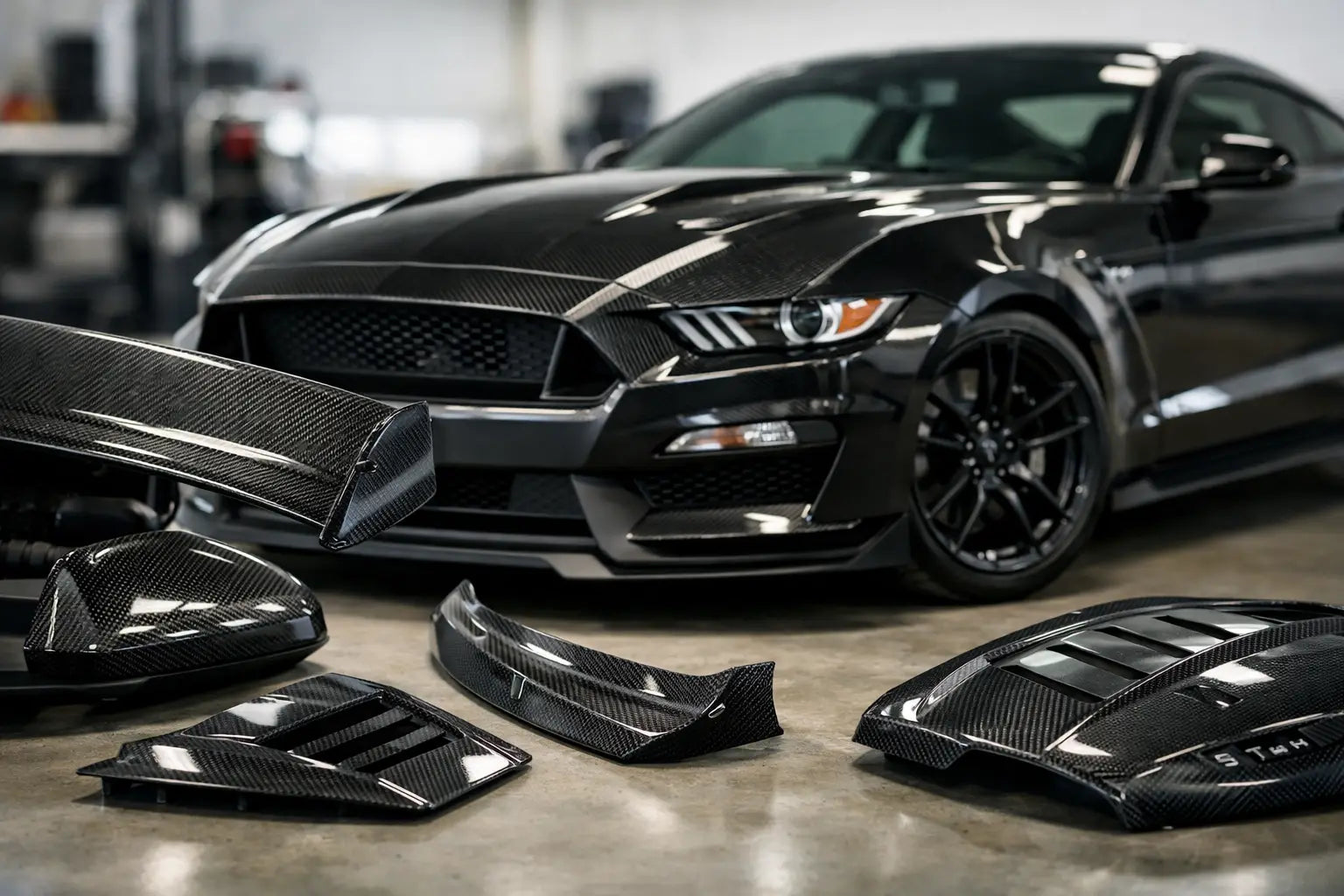
A Mustang build can go one of two ways very quickly. It either ends up looking like a random stack of catalogue parts, or it comes together with real intent - lighter, sharper, more focused, and visibly engineered. That is exactly where Mustang carbon fibre parts make sense. Done properly, they are not just cosmetic add-ons. They change the way the car presents itself, trim weight in the right areas, and push the whole build closer to that track-bred, motorsport-led finish most owners are actually chasing.
The key word there is properly. Carbon fibre carries a premium for a reason, but not every part deserves a place on every car. Some upgrades are all about visual impact. Some have a genuine performance case. The best builds know the difference.
Why Mustang carbon fibre parts matter
On a platform as well supported as the Mustang, choice is not the problem. Filtering out the gimmicks is. Carbon fibre has become shorthand for performance because it offers a rare mix of low weight, high stiffness and unmistakable visual appeal. On the right part, that matters. On the wrong part, you are simply paying more for a finish.
For enthusiastic road cars, the appeal usually starts with appearance. A carbon front splitter, side skirts, rear diffuser or boot spoiler gives the car a harder edge and a more motorsport-focused identity. The weave, the gloss, the exposed material - it signals purpose in a way painted plastic never quite can.
For harder-used cars, there is more going on. Weight reduction is rarely dramatic from one single component, but cumulative gains matter. Trim mass from several exterior and interior sections, especially higher up on the car, and you start improving the feel of the package. Steering response, directional changes and overall sharpness can all benefit. It is not magic, and it will not transform a stock Mustang into a race car overnight, but it is part of a serious build philosophy.
Which carbon fibre upgrades actually make sense?
The best place to start depends on what your Mustang is built to do. If the priority is road presence with factory-plus fit and finish, exterior aero pieces tend to offer the biggest visual return. Front lips and splitters lead the way because they completely alter the nose of the car. A good one makes the Mustang look lower, wider and more aggressive without tipping into over-styled territory.
Side skirts and rear diffusers work well when they are matched properly. That is where a lot of builds either come together or fall apart. One carbon piece can look deliberate. Three mismatched pieces with different weave direction, gloss level or fitment quality can make the car look unfinished.
Spoilers are another area where it depends on the brief. A subtle carbon lip spoiler suits a fast-road car that still needs clean lines. A larger blade or wing setup fits a track-biased build better, where the overall look is already moving towards aero function rather than pure styling.
Bonnets, wings and boot lids sit in a different category. These are often the parts with the strongest weight-saving potential, but they also demand the highest standards in manufacturing and fitment. Cheap panels can create horrible shut lines, poor latch alignment and long-term durability issues. On these bigger components, material quality and development standard matter more than the sales pitch.
Inside the car, carbon trim can finish the cabin nicely, especially on S550 and newer models where the dashboard and console already have a modern performance feel. But interior pieces only work when the rest of the build supports them. If the car is otherwise standard, too much carbon cabin trim can feel forced. If the Mustang already has bucket seats, a wheel upgrade, proper pedals and a more focused setup, then carbon interior details make much more sense.
Real carbon fibre vs carbon-effect parts
This is where buyers either spend wisely or spend twice. Genuine carbon fibre parts are built with actual carbon cloth and resin, often with a clear coat finish over the weave. Carbon-effect parts are usually plastic or fibreglass components dressed up to imitate the look. From a distance, they can seem similar. Up close, the difference is obvious.
Real carbon should have a consistent weave, clean edges, proper lacquer depth and a finish that looks precise rather than printed. It should also feel like a premium engineered component, not just a styling accessory. That does not mean every real carbon part is automatically excellent. Poor lamination, weak mounting points and uneven coatings still happen. But if you are paying for carbon, it needs to be more than a visual trick.
For some owners, carbon-effect trim has a place as a budget cosmetic upgrade. There is nothing wrong with that if expectations are realistic. But if your aim is a proper performance-led Mustang build, genuine carbon is the route that holds up in terms of finish, value and credibility.
Fitment is everything
A premium material cannot rescue poor fitment. In fact, carbon fibre often makes bad fitment more obvious because the eye is drawn straight to it. Shut lines, panel gaps, mounting alignment and contour matching all need to be right.
This is especially important on Mustangs because the car has strong factory body lines. A splitter that sits unevenly, mirror caps that do not seat correctly, or side skirts that drift away from the sill profile will stand out immediately. The part needs to look like it belongs on the car, not like it was adapted as an afterthought.
That is why the better products are designed around proper vehicle-specific development, often using 3D scanning, CAD design and repeated test fitting. Those details are not marketing fluff. They are the difference between a part that bolts on cleanly and one that becomes a weekend-long headache.
The trade-off: style, weight, cost
Carbon fibre is not a one-answer upgrade. It always comes with a trade-off, usually around budget. A quality carbon splitter or spoiler costs more than ABS plastic alternatives. Full replacement panels cost more again. If your budget is tight, it makes more sense to buy fewer, better parts than to chase a long list of lower-grade pieces.
There is also the question of use case. A road-driven Mustang that sees occasional spirited driving may benefit more from a few standout exterior components and carefully chosen interior details than from an all-out lightweight programme. A car that regularly does track days has a stronger case for weight-focused panels, brake cooling considerations and aero parts that complement the chassis setup.
Then there is durability. Carbon fibre is strong, but that does not mean invincible. Low front splitters on UK roads are always at risk from steep ramps, rough surfaces and badly designed speed humps. If the car spends its life in real-world driving rather than on smooth circuit tarmac, practicality has to stay part of the conversation.
Building a Mustang with intent
The strongest Mustang builds do not use carbon fibre everywhere. They use it where it creates a clear gain. That might mean a front-end package that sharpens the car visually, a rear aero setup that balances the lines, or selected lightweight panels for a more committed performance build. What matters is cohesion.
Think about the whole car. Wheel design, ride height, exhaust setup, stance, paint colour and even brake hardware all affect how carbon parts land visually. Gloss carbon against a darker body colour can look factory and understated. Against brighter paint, it tends to become a focal point. Neither is wrong, but the result should feel intentional.
This is also where buying from a specialist matters. A retailer that understands Ford platforms and performance fitment can usually tell the difference between a part that merely looks good in product shots and one that works on a real car. That specialist knowledge is worth more than a long discount list.
150 Performance sits firmly in that camp - focused on upgrades that suit enthusiast builds, not generic trim for passing trends. For Mustang owners who want carbon parts with proper visual impact and engineering credibility, that sort of curation matters.
Choosing the right Mustang carbon fibre parts for your car
If your Mustang is your weekend car, start with the parts you will see and appreciate every time you approach it. A front splitter, spoiler or mirror cap set can make a real difference without pulling the car apart. If it is moving towards a more aggressive road-and-track setup, think in packages rather than one-offs so the lines stay consistent.
If you are chasing lap time, be more ruthless. Weight-saving panels, functional aero and parts with proven fitment should come first. Cosmetic-only pieces can wait. A fast Mustang does not need to shout, but it should look like every component has a job to do.
That is really the point of carbon fibre on this platform. Not decoration for the sake of it, and not cheap theatre. The right parts give a Mustang more purpose, more presence and a cleaner connection to the kind of motorsport-inspired build enthusiasts actually respect. Buy with a clear plan, fit parts that deserve the material, and the car will tell the story before the engine even fires.
Share:
9 Best Focus RS Upgrades That Matter
Lightweight Carbon Fibre Bonnet Benefits