
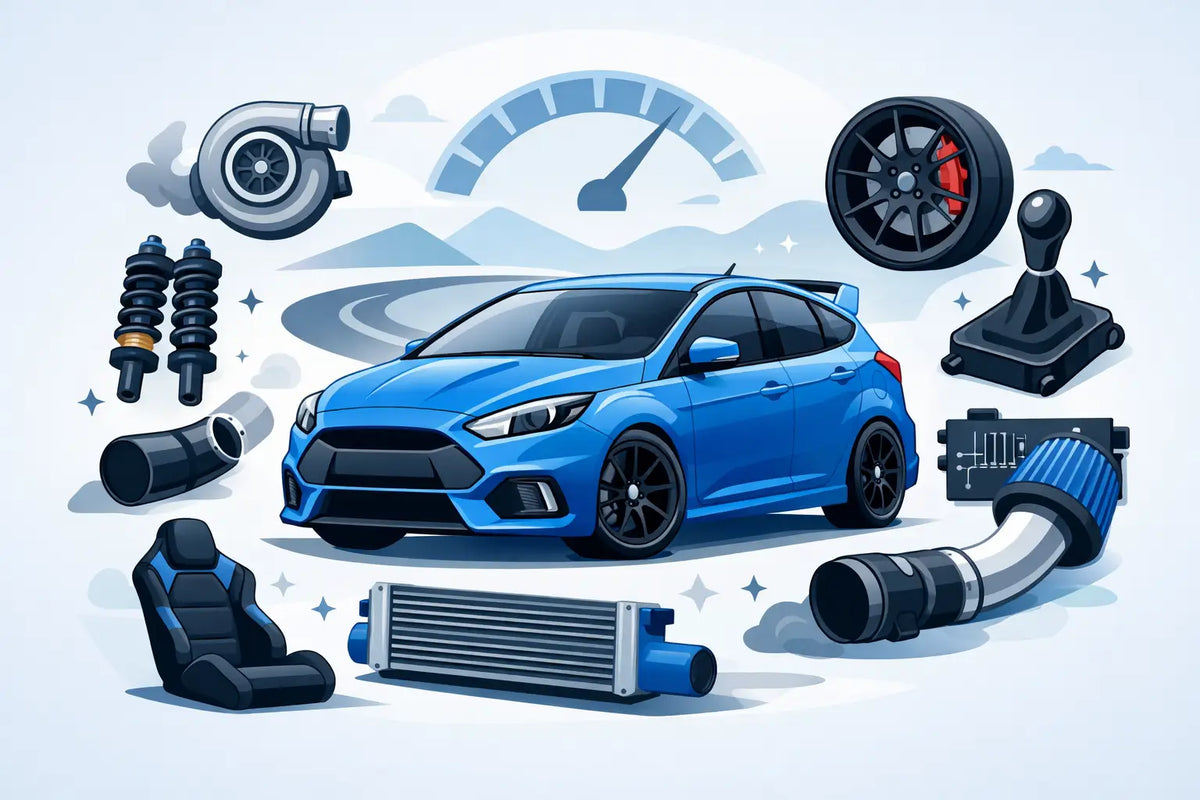
The Mk3 Focus RS does not need much to feel serious. Out of the box, it is already quick, sharp and full of attitude. But if you are chasing the best Focus RS upgrades, the real gains come from choosing parts that improve how the car puts power down, manages heat and stays composed when you start driving it properly.
That is the difference between a car that looks modified and one that feels engineered. On a Focus RS, the best upgrades are rarely the flashiest. They are the parts that make the chassis cleaner, the power delivery harder and the whole package more confidence-inspiring on a fast road or at a track day.
What makes the best Focus RS upgrades worth doing?
The Focus RS responds well to modification, but it also exposes weak points quickly. Add power without sorting cooling and you will feel it. Fit cheap suspension without understanding geometry and you can make the car worse. Chase noise over flow and you might spend a lot for very little pace.
A smart build works in stages. Start with the areas that give the biggest improvement per pound, then support each change with the right hardware. That approach keeps the car balanced and reliable, which matters far more than a dyno number you only mention online.
1. Intake and induction upgrades
A quality intake is one of the most common starting points, and for good reason. The factory system is decent, but a better-designed intake can improve airflow, sharpen throttle response and let the 2.3-litre EcoBoost breathe more freely. You also get a more purposeful induction note, which suits the RS perfectly.
Not every intake is equal though. Heat management, filter placement and pipe design all matter. A badly thought-out kit can pull in hotter air and deliver more noise than performance. The best setups are engineered around actual airflow and fitment rather than just a large cone filter in the engine bay.
If your car is staying near standard power, the gains will be modest. If you plan to remap it later, an intake becomes a more useful supporting mod.
2. Intercooler and charge air cooling
If there is one upgrade that earns its place on almost every tuned Focus RS, it is an intercooler. Once you start driving the car hard, especially in warmer conditions or over repeated pulls, intake temperatures matter. A stronger intercooler helps the car hold performance more consistently rather than feeling great once and softer afterwards.
This is one of the best Focus RS upgrades because it supports both reliability and repeatable performance. It is not just about peak power. It is about keeping the engine happier when the car is worked as intended.
For fast road use, a well-sized road-and-track intercooler is usually the sweet spot. Go too extreme and you may add cost and complexity without seeing a meaningful benefit on your setup.
3. ECU calibration
A proper remap transforms the RS more than almost any single mod. The car picks up urgency, mid-range torque and overall pace in a way you notice immediately. With the right supporting parts, the factory hardware has more to give.
That said, calibration needs to match the car and how you use it. A safe, well-developed tune is worth far more than a headline figure that pushes everything to the edge. Fuel quality, intake temperatures and supporting mods all play a part.
For most owners, a stage one or stage two style map with sensible hardware is the best route. It delivers a stronger, faster car without turning it into a constant project. If you are building for heavy track use, talk honestly about heat, fuelling and durability before chasing the last few bhp.
4. Exhaust upgrades
The Focus RS should sound aggressive, but an exhaust upgrade should do more than just add volume. A good system reduces back pressure, improves flow and gives the car a harder motorsport edge without drone ruining every motorway run.
Cat-back systems are popular because they change the character of the car without going too deep into emissions-related hardware. For owners wanting more performance from a mapped setup, a higher-flow downpipe can help, but this is where legality, road use and supporting tuning become important.
The trade-off is simple. The louder and more aggressive the system, the less subtle the car becomes day to day. If your RS sees commuting as well as weekend blasts, aim for a setup with proper engineering rather than maximum noise.
5. Uprated suspension
A fast hatch is only as good as its ability to control weight transfer, and the RS has plenty to gain here. Uprated springs, coilovers or matched damper packages can tighten body control, improve front-end response and give the car a more planted feel through quicker direction changes.
This is also the area where owners can get it badly wrong. Go too stiff for British roads and the car can become nervous, harsh and less effective where the surface is poor. A proper road-and-track setup should improve composure, not just reduce arch gap.
If the car is mainly road driven, a well-matched spring and damper package often makes more sense than an ultra-hard coilover kit. If you regularly do track days, adjustability becomes more valuable, especially when combined with a proper alignment.
6. Anti-roll bars, mounts and bush upgrades
Some of the most effective changes on an RS are the ones you feel more than see. Uprated anti-roll bars can sharpen turn-in and reduce roll, while improved engine mounts and selected bush upgrades can make the car feel tighter and more direct under load.
These are classic enthusiast mods because they refine the chassis without relying on big numbers or flashy claims. The downside is added noise, vibration or harshness, depending on the material and stiffness. That can be completely worth it on a weekend car, but less appealing on a daily.
If you want the car to feel more connected without jumping straight into a full suspension overhaul, this is a strong middle ground.
7. Brake upgrades that can handle repeated abuse
Power is fun once. Brakes matter every time you arrive at the next corner. The standard RS braking package is capable, but once pace increases or track use enters the picture, better pads, fluid and lines become very worthwhile.
A lot of owners do not need a full big brake kit straight away. In fact, performance pads, uprated brake fluid and braided lines can dramatically improve pedal feel and fade resistance for much less money. That is often the best value route for fast road and occasional circuit use.
For harder track work, bigger discs and calipers start to make more sense, especially if the car is also carrying more speed from power upgrades. Just be honest about your use case. Overspecced brakes for road driving alone can be expensive overkill.
8. Wheels and tyres
This is where the car meets the road, so it deserves more attention than it often gets. Lightweight wheels reduce unsprung mass, and the right tyre transforms traction, steering feel and braking confidence. On a four-wheel-drive hot hatch, that change is huge.
A premium road tyre will suit most owners better than an ultra-aggressive option that only comes alive with heat. If you use the car through all seasons, especially in typical British conditions, a tyre that works in cold and wet weather is often the smarter choice.
Wheels are not just about looks either. Correct width, offset and weight matter. A cheap wheel that looks good on social media can undo the precision the RS is known for.
9. Aero and carbon fibre with purpose
There is nothing wrong with wanting the Focus RS to look more aggressive. It is a car that suits a stronger visual package. But the best exterior upgrades are the ones that combine fit, finish and functional intent.
A well-made splitter, spoiler extension, diffuser or bonnet vent can add presence and, in some cases, support airflow management. Premium carbon fibre parts also bring weight-saving potential and a more motorsport-led finish when they are properly designed. That engineering piece matters. Badly fitting trim is just decoration.
For a platform with this much character, exterior parts should enhance the factory design, not fight against it. That is where specialist brands and platform knowledge make all the difference.
Building the right package for your Focus RS
The strongest RS builds are never random. If your car is mainly road driven, start with tyres, brakes and cooling before adding power. If it is a weekend weapon, a remap, intercooler, intake and suspension package makes a lot of sense. If you are aiming for track consistency, cooling and braking should be near the top of the list every time.
It also pays to think about how each upgrade affects the next. More boost creates more heat. More grip puts more demand on the chassis. More speed asks more from the brakes. That chain matters, because a properly sorted Focus RS feels fast everywhere, not just in one part of the rev range.
For enthusiasts buying parts with long-term goals in mind, this is where a specialist retailer earns its place. 150 Performance understands that the right upgrade is not just about what fits the car, but what improves it under real use.
The best Focus RS upgrades are the ones that make you trust the car more when the road opens up, the surface gets rough and the pace climbs. Build it with that standard in mind, and every part will earn its place.
Share:
8 Best Ford Fiesta ST Mods That Matter
Mustang carbon fibre parts that earn their place