
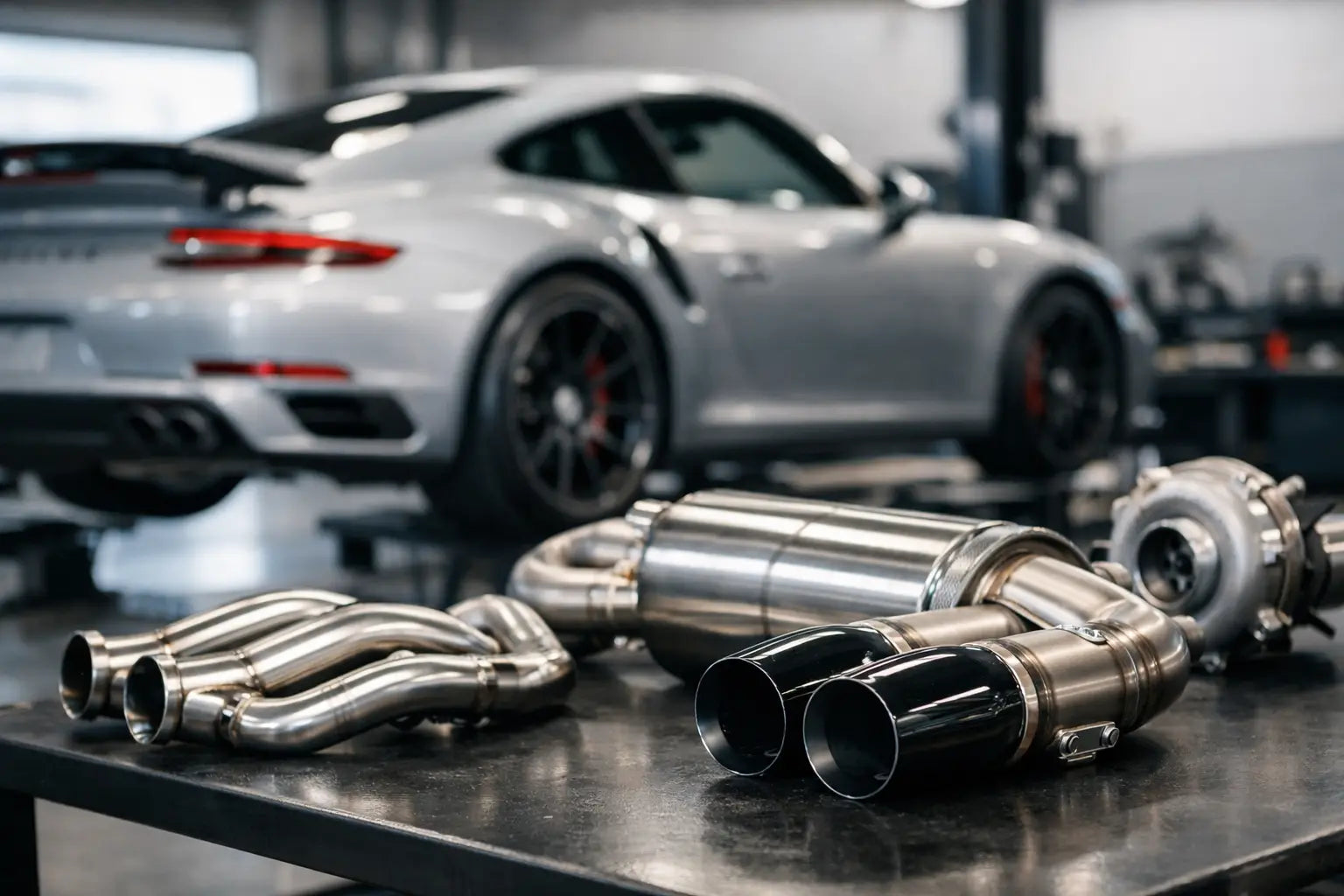
The first time you hear a flat-six wake up through the right system, you stop thinking about exhausts as pipework and start treating them as part of the car’s character. A Porsche performance exhaust upgrade is one of the few modifications that changes sound, response, weight and driver feel in a single hit - but only if you choose the setup with a clear goal in mind.
For some owners, that goal is sharper tone without ruining longer motorway runs. For others, it is faster petrol flow, reduced back pressure and a more aggressive top-end note that finally matches the badge on the bonnet. The right answer depends on the generation, the engine, how the car is used, and how far you want to push it away from factory refinement.
Why a Porsche performance exhaust upgrade makes sense
Porsche does not build dull cars. Even standard systems are engineered properly, with emissions compliance, daily usability and production consistency all built in. That balance is exactly why many owners start looking at an upgrade. Factory exhausts have to please a broad audience. Enthusiasts usually do not.
A stronger exhaust setup can change the car in three key ways. First, it reshapes the soundtrack. That means a cleaner cold start, more character through the mid-range and a harder-edged note under load. Secondly, it can improve flow, particularly on turbocharged models where a freer system helps the engine breathe more efficiently. Thirdly, a quality system often sheds weight, especially if it replaces heavier OEM sections with stainless steel, titanium or a more focused valved design.
That said, more noise is not always more quality. A badly judged exhaust can introduce drone at cruising speeds, sound thin at low revs or make a premium car feel cheap. On a Porsche, fitment, tuning and acoustic quality matter as much as outright volume.
Cat-back, axle-back or full system?
This is where buyers either get it right first time or spend twice.
An axle-back system changes the rear section, usually delivering a noticeable sound increase with relatively straightforward installation. It is often the sensible choice for owners who want more voice without going too far into emissions-sensitive components. A cat-back reaches further forward and replaces more of the system, which generally gives a bigger change in tone and flow.
A full system is the most serious route. On naturally aspirated cars, that can mean headers and sports cats. On turbocharged models, it may involve downpipes and a less restrictive rear section. This is where the biggest performance gains can sit, but it is also where cost, legality and calibration become more relevant. If you are building a road car with occasional track use, a full system may be perfect. If you mainly drive in town and on longer trips, it may be overkill.
Choosing by model and engine
Not every Porsche reacts to exhaust upgrades in the same way. That is the point many generic retailers skip, and it matters.
911 models
A 911 is all about preserving that rear-engined identity while sharpening the feedback. On Carrera models, owners usually want more presence and a cleaner flat-six howl without turning the car into a constant motorway headache. Turbo models respond differently. Flow improvements can support quicker spool and a more urgent character, but the sound profile is naturally less raw than a naturally aspirated engine, so system design becomes crucial.
GT cars sit in their own lane. Here, buyers tend to prioritise weight reduction, motorsport-grade materials and a note that feels properly focused on track. The trade-off is obvious - what sounds sensational on a fast B-road can feel uncompromising on a long journey.
Cayman and Boxster models
Mid-engined Porsches can benefit massively from the right exhaust because the cabin sits so close to the action. A well-developed system adds edge and excitement. A poor one can flood the cabin with frequencies you will regret within a week.
For Cayman and Boxster owners, valve control and acoustic tuning are worth serious attention. You want engagement when the road opens up, not constant boom at 70 mph. If the car sees regular spirited use, this is one of the best platforms for a carefully chosen upgrade because the sound change is immediate and the driving experience becomes far more intense.
Macan and Cayenne performance variants
On the SUV side, the goal is usually less about chasing every last kilogram and more about giving the vehicle a soundtrack with the authority to match its pace. Turbocharged V6 and V8 models can sound deeper, sharper and more purposeful with the right system, especially when paired with valved control.
The challenge here is restraint. A Cayenne or Macan that is used daily still needs civility. The best systems add drama on demand and stay controlled when you are simply getting on with the week.
Sound, performance and daily use
The best Porsche exhaust upgrades are not judged on a rev video alone. They are judged after a month of ownership.
Sound is emotional, but it should still be engineered. A good system has shape to it. You want a richer idle, a harder pull through the mid-range and a clean top-end that does not flatten into harshness. Volume for the sake of volume gets old quickly.
Performance gains vary. On some applications, especially turbocharged cars, a freer-flowing setup can complement other supporting modifications and produce worthwhile improvements in throttle response and power delivery. On others, the gain is more about feel than headline figures. Reduced weight, sharper response and a more alive powertrain often matter more in the real world than a small dyno number.
Daily use is where compromise enters the chat. If you do school runs, city traffic or long-distance touring, drone will become your enemy faster than you expect. If your Porsche is a weekend or track-focused car, you can lean further towards a louder, lighter and more aggressive package. Neither choice is wrong. The mistake is buying for internet approval instead of your own use case.
Materials, valves and build quality
A Porsche deserves better than average fabrication. That should not need saying, but here we are.
Stainless steel remains a strong choice for road and fast-road builds because it balances durability, cost and sound quality well. Titanium sits at the premium end, with real weight savings and a sharper, more exotic note. It also carries the price tag to match. If reducing mass is a priority, especially on a more focused build, titanium makes a lot of sense.
Valved systems are often the smartest option for modern Porsches. They give you two cars in one - civil when needed, properly vocal when opened up. For owners who want more theatre without committing to permanent loudness, it is hard to argue against them.
Then there is fitment. Poorly aligned tips, weak welds, bad clamp design and vibration issues have no place on a premium platform. Enthusiast buyers notice that stuff immediately, and they should. Precision matters. The best exhausts do not just sound right. They sit right, clear correctly, and look like they belong there.
What to check before you buy
Before committing to a Porsche performance exhaust upgrade, get specific about the car and your target outcome. Know the exact model year, engine and factory exhaust configuration. Decide whether your priority is sound, performance, weight reduction or a blend of all three. If the car already has intake, tuning or turbo-related modifications, the exhaust should complement that package rather than fight it.
You should also think about road legality, MOT implications and noise limits at your usual track venues. A system that works brilliantly on paper can become a nuisance if it creates avoidable hassle every time the car is tested or taken to a circuit day.
This is also where specialist suppliers earn their keep. A retailer with a proper performance background understands the difference between a parts catalogue and a build strategy. That matters whether you are upgrading a 997 Carrera for weekend road use or fitting a more serious system to a newer turbocharged platform.
The right upgrade feels factory, only better
That is really the benchmark. The best exhaust upgrades do not make your Porsche feel modified for the sake of it. They make it feel like Stuttgart should have signed it off that way from the start, if regulations and mass-market compromise were not in the room.
At 150 Performance, that is the standard serious enthusiasts are chasing - parts with intent, proper fit, real engineering value and a result you can feel every time the car fires into life. If you choose carefully, your exhaust upgrade will not just make the car louder. It will make it feel more awake, more precise and far more yours.
The smart move is not buying the loudest system. It is buying the one that suits the way you actually drive, because that is the setup you will still rate highly long after the novelty wears off.
Share:
Best Exhaust for Audi S3: What to Choose
McLaren Carbon Fibre Upgrades That Matter