
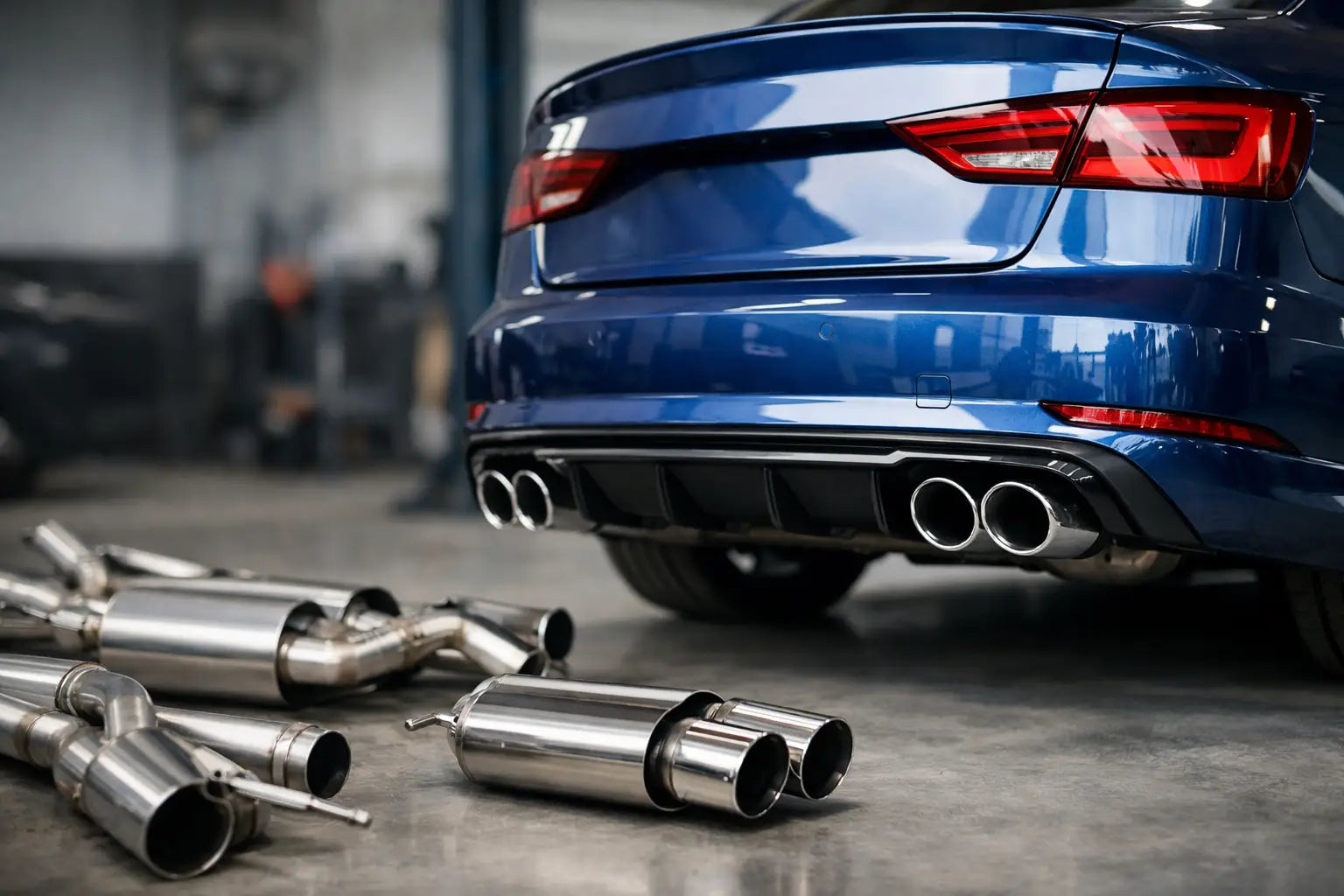
If your Audi S3 still sounds flatter than it feels, the exhaust is usually the missing piece. Finding the best exhaust for Audi S3 is not just about making more noise - it is about getting the right balance of tone, flow, fitment and character for the way you actually drive the car.
The S3 sits in an interesting spot. It is quick enough to justify proper hardware, refined enough to expose cheap exhausts straight away, and tunable enough that a restrictive or badly designed system becomes a weak point as power climbs. That means the right setup can transform the car. The wrong one can leave you with drone on the motorway, awkward fitment, or a note that sounds harsh rather than purposeful.
What makes the best exhaust for Audi S3?
The honest answer is that it depends on your goal. Some owners want a sharper factory-plus sound with no compromise in daily use. Others want a louder, harder-edged system that suits a mapped car and makes every upshift feel more dramatic. A few are chasing outright flow for bigger turbo setups, where exhaust design matters beyond sound alone.
For most S3 owners, the best exhaust is the one that improves three things at once: petrol flow, sound quality and overall finish. Peak power gains matter, but on a road car they are only part of the story. You hear the exhaust every time you start the car, every time you short-shift through town, and every time you stretch it out on a fast B-road. The tone has to be right.
Build quality matters just as much. A proper system should use decent grade stainless steel, clean welds, accurate bends and strong mounting points. On a premium platform like the S3, poor fitment stands out immediately. If the tips sit unevenly or the pipework knocks under load, it ruins the whole upgrade.
Cat-back, resonated or valved?
This is where the choice gets more specific, because not every S3 owner wants the same level of aggression.
A cat-back system is the most common route. It replaces the exhaust from the catalytic converter backwards and usually gives the best mix of sound, visual upgrade and improved flow without making the car awkward to live with. On a lightly modified or standard S3, that is often the sweet spot.
A resonated system tends to suit daily drivers best. You still get a deeper, fuller note, but with less cabin drone and less boom at steady motorway speeds. If the car does commuting duty, long trips or family miles as well as fast-road work, resonated usually makes more sense than the loudest option on the shelf.
A non-resonated system is the bolder choice. It gives more volume, more crackle and a more obvious change in character, but there is always a trade-off. Some setups sound brilliant when you are on it and tiring when you are not. That can be worth it if you want a more track-focused feel, but it is something to be honest about before buying.
Valved exhausts sit at the premium end and, for many owners, they come closest to the ideal answer. Open when you want theatre, civilised when you do not. On the Audi S3, a well-engineered valved system works especially well because the car already has a dual personality - compact hatchback manners with genuine performance underneath. A good valved setup lets the exhaust match the car.
Sound matters more than volume
A lot of buyers start by asking which exhaust is loudest. That is understandable, but it is not the best question. The better question is which exhaust makes the S3 sound stronger, cleaner and more mechanical without turning it coarse.
The EA888 engine responds well to exhaust upgrades, but its note can vary a lot depending on pipe diameter, silencer design and whether the system keeps things controlled at lower revs. A good system adds depth and sharpens the car’s response without making it sound tinny. That means less focus on raw decibels and more focus on quality of tone.
This is also why platform-specific engineering matters. Generic-looking systems often promise plenty and deliver little more than extra noise. The best exhausts for the Audi S3 are designed around the car’s layout, bumper cut-outs, hanger positions and petrol flow requirements. That gives you cleaner installation, better tip alignment and a sound profile that feels intentional.
Performance gains - real, but not magic
If you are expecting an exhaust alone to turn the S3 into a different car, keep it realistic. On a standard vehicle, gains are usually modest. You may see improved throttle response, a little extra top-end freedom and a more eager feel, but the biggest immediate change is normally the way the car sounds and delivers its performance.
Where the exhaust becomes more important is on tuned cars. Once the S3 is mapped, especially with intake and downpipe upgrades, the system has more work to do. Better flow helps the turbo breathe more efficiently, supports power targets more reliably and reduces the chance of the exhaust becoming a bottleneck.
For higher-output builds, the best exhaust for Audi S3 is rarely the cheapest one. Larger diameter pipework, proper merge sections and well-controlled back pressure all start to matter far more when the car is being pushed harder. If future tuning is part of the plan, buy once with headroom rather than upgrading twice.
Choosing the right setup for your kind of driving
If your S3 is mainly a road car, daily usability should stay near the top of the list. That usually points towards a resonated cat-back or a quality valved system. You still get a stronger soundtrack and better rear-end presence, but without the sort of constant low-frequency drone that gets old quickly.
If the car is a weekend toy, a louder setup makes more sense. In that case, you can be more aggressive with specification because refinement is not the priority. The extra drama suits the car when it is driven hard and often pairs well with other modifications.
If you do track days, think beyond volume. Some circuits have strict noise limits, and an exhaust that sounds perfect on the road may become a problem at sign-on. A valved system can help, and so can a well-designed resonated setup that keeps the note clean rather than just loud. Fast cars that stay on circuit are usually built with more discipline than noise-chasing social media projects.
What to look for before you buy
Fitment should be non-negotiable. The Audi S3 deserves an exhaust that sits properly in the bumper, clears heat shields cleanly and uses the factory mounting locations without stress. Good suppliers understand this and stock systems developed specifically for the platform rather than one-size-fits-most options.
Material quality is another major factor. T304 stainless steel is the usual benchmark for a reason. It offers strong corrosion resistance, solid durability and the right premium finish for a car like the S3. Tip design matters too, because the rear view of the car changes dramatically with the right set of tailpipes. Subtle works for some builds, while others suit a larger, darker, more aggressive finish.
Then there is brand reputation. In the performance world, the best names earn their status through proper development, consistent weld quality and real-world fitment, not oversized claims. If a system has been engineered with care, you can usually see it in the details before the engine is even started.
Is a valved system worth the extra money?
For plenty of S3 owners, yes. It gives you more control, keeps the car usable in more situations and adds a genuine premium feel to the upgrade. That flexibility matters on a car that may be used for the daily run one day and a hard back-road blast the next.
The downside is cost. Valved systems are more complex and naturally sit higher in the market. If budget is tight, a good resonated cat-back often delivers the best value. But if you want one exhaust that covers comfort and aggression in equal measure, valved is difficult to beat.
That is also where a specialist retailer can make a real difference. A business like 150 Performance understands that enthusiasts are not just buying noise - they are buying engineering, fitment confidence and a setup that suits the build properly.
The best exhaust for Audi S3 comes down to intent
There is no single answer that suits every owner, because not every S3 is built for the same purpose. A daily-driven hatch on mild software wants something very different from a harder-used car with supporting modifications and track ambitions.
If you want the safest all-round choice, go for a high-quality resonated or valved cat-back from a respected manufacturer. If you want maximum theatre and the car is not expected to stay subtle, a more aggressive non-resonated setup may be worth it. If you are building for bigger power, choose with future flow capacity in mind rather than today’s spec.
The right exhaust should make the Audi S3 feel more complete every time you press the start button. Not forced, not cheap, not overdone - just sharper, stronger and more in line with what the platform should have sounded like from the factory.
Share:
How to Reduce Car Weight for Track Days
Porsche performance exhaust upgrade guide