
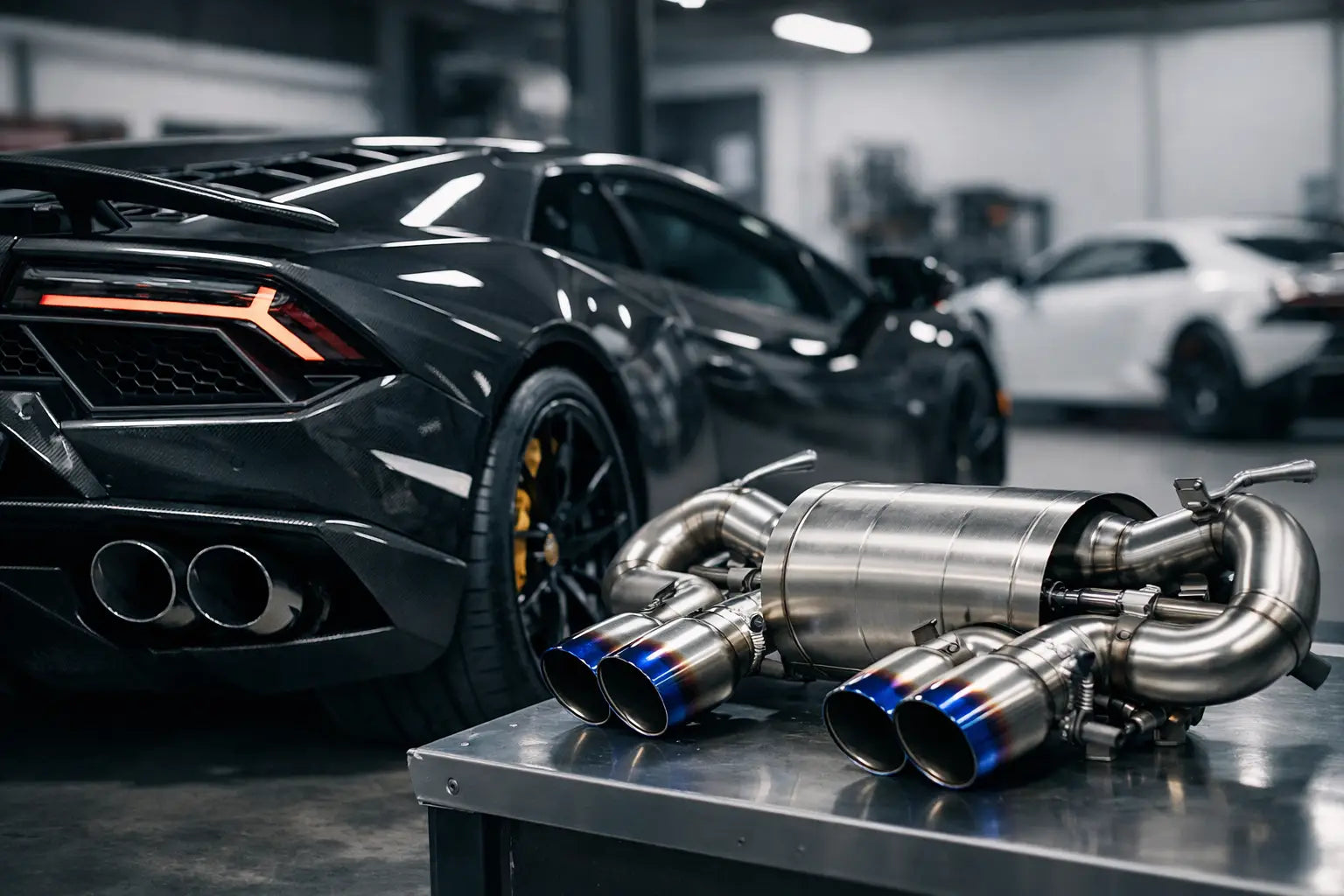
A Lamborghini should never sound muted. If the factory system feels too restrained, too heavy, or simply too polite for what sits behind your head, Lamborghini aftermarket exhaust systems are one of the few upgrades that completely change the car’s character from the first ignition. Done properly, they do more than add noise. They sharpen response, cut weight, improve petrol flow, and give the car the soundtrack its shape has always promised.
Why Lamborghini aftermarket exhaust systems matter
On a car like a Huracan or Aventador, the exhaust is part of the experience, not an afterthought. The engine note shapes how the car feels at idle, under load, on downshifts, and at full chat near the top of the rev range. A good system adds theatre, but the engineering side matters just as much.
Factory exhausts have to satisfy global noise regulations, emissions standards, cost targets, and broad customer expectations. That usually means compromise. Pipe routing, silencer design, valve behaviour, and material choice are all influenced by rules that do not always favour maximum sound or minimum weight.
An aftermarket system gives that control back to the owner. You can chase a harder V10 scream, a cleaner high-rev tone, a deeper V12 note, or a more aggressive valve-open character without settling for a one-size-fits-all factory setup. For serious owners, that difference is the whole point.
What actually changes with an upgraded system
The obvious gain is sound, but that is only part of the story. A properly engineered exhaust can reduce back pressure, improve throttle sharpness, and remove unnecessary mass from high up and rearward in the car. On a performance platform, that matters.
Material choice plays a major role here. Stainless steel systems are proven, durable, and often offer a strong balance between tone and value. Titanium goes further. It cuts more weight, resists heat brilliantly, and usually produces a crisper, more metallic note that suits modern Lamborghini platforms especially well. If you are building for maximum theatre and weight reduction, titanium is hard to ignore.
Valve control is another big factor. Some owners want civilised cold starts and motorway manners, then full aggression when the road opens up. Others want the loudest possible setup all the time. Neither approach is automatically right. It depends on how you use the car, where you drive it, and how much compromise you are willing to accept.
Sound quality matters more than raw volume
This is where many buyers get it wrong. Loud does not always mean good. On an exotic platform, poor exhaust design can produce rasp, drone, or a flat synthetic tone that sounds impressive for five minutes and tiring after an hour.
The best Lamborghini aftermarket exhaust systems are tuned for the engine’s natural voice. A Huracan V10 should build from a tight, mechanical bark into a sharp-edged wail. An Aventador V12 should sound fuller, more layered, and more violent as revs climb. If the system loses that character and replaces it with boom or harshness, it is not an upgrade in any meaningful sense.
Choosing the right system for your Lamborghini
The right exhaust depends on the model, the generation, and what you actually want from the car. A road-driven Huracan used for weekend blasts has different needs from a track-focused build chasing weight reduction and heat management.
Cat-back systems are usually the starting point. They change the rear section of the exhaust and can deliver a major jump in tone with relatively straightforward installation. For many owners, this is enough. It brings the sound forward without pushing the car too far into unusable territory.
Sport catalyst and decat options go further. These can free up more sound and flow, but they bring trade-offs around emissions compliance, warning lights, odour, and road legality. On some builds, they transform the car. On others, they create more hassle than benefit. If the car spends most of its life on the road, this is the point where being honest about your usage matters.
A valved system often makes the most sense for mixed use. It gives you two personalities in one package - composed when you need it, savage when you want it. For owners who drive through villages early in the morning or spend time on longer motorway runs, that flexibility is worth paying for.
Fitment and build quality are non-negotiable
A Lamborghini is not the place for universal thinking or cheap shortcuts. Poor fitment, weak welds, lazy hanger positioning, and bad heat shielding can lead to rattles, vibration, cabin resonance, or worse. These cars run hot, packaging is tight, and tolerances matter.
That is why platform-specific engineering is everything. The best systems are designed around the exact car, with proper attention paid to routing, thermal load, valve integration, and mounting points. Race-proven thinking matters here. Precision in development leads to precision on the car.
If a system looks flashy online but offers little real detail on materials, weld quality, weight savings, or model-specific compatibility, treat that as a warning. Premium platforms deserve premium engineering.
The real trade-offs owners should think about
There is no perfect exhaust, only the right compromise for your build. More volume can mean more attention, more cabin presence, and more chance of drone depending on the setup. Less silencing can sharpen the top end but sometimes remove some of the depth lower down. Titanium saves weight and sounds incredible, but it usually comes at a higher price point.
Cold starts are another reality check. What sounds heroic at a cars-and-coffee meet may feel less heroic at 6am in a quiet residential street. If your car lives in a built-up area, valve strategy and start-up behaviour deserve serious thought.
Then there is legality. Not every system is suitable for road use in every market, and not every owner wants to deal with inspection issues, extra attention, or emissions complications. That does not mean you avoid aggressive setups altogether. It means you choose with your eyes open.
Huracan and Aventador owners want different things
The Huracan crowd often chases sharpness. The V10 already has a wild top-end character, so the best exhaust upgrades tend to focus on unlocking more clarity, more volume with the valves open, and less factory filtering. Weight reduction is also a strong pull here, especially on cars that see fast road and circuit use.
Aventador owners often want scale. The V12 is theatre by default, and the right system makes it feel even more dramatic without losing richness. Too much simplification can make a V12 sound oddly thin. The strongest setups preserve depth while letting the engine sound more mechanical, more immediate, and more alive.
That distinction matters because a system that works brilliantly on one platform might miss the mark on another. Exhaust choice should always follow the engine’s natural character, not fight it.
Installation is part of the result
Even the best hardware can disappoint if the installation is poor. Valve calibration, clamp alignment, sealing, heat management, and post-fit checks all influence how the finished car feels. An exhaust should sit cleanly, clear surrounding components properly, and operate exactly as intended from the first start.
This is not a mod to rush. On premium performance cars, details matter. A correctly installed system will sound cleaner, last longer, and avoid the little annoyances that ruin ownership.
For enthusiasts buying from specialist retailers such as 150 Performance, that matters as much as the product itself. You want parts selected with a performance mindset, not generic catalogue filler aimed at buyers who cannot tell the difference.
Is an aftermarket exhaust worth it?
On most Lamborghinis, yes - if you buy properly. Few upgrades deliver the same immediate mix of emotional payoff and tangible engineering benefit. The car feels lighter in character, more alert, and more faithful to the badge on the nose. Every tunnel, every overrun, every upshift starts to feel like an event.
But the right answer is not simply the loudest system on the market. It is the one that suits the model, the use case, and your tolerance for compromise. Some owners want a fast-road setup with better tone and no drama. Others want full theatre, reduced mass, and track-ready intent. Both are valid. What matters is choosing a system that has been engineered with the same seriousness as the car itself.
A Lamborghini already has presence. The right exhaust just makes sure the sound keeps up.
Share:
McLaren Carbon Fibre Upgrades That Matter
Track Day Brake Upgrades for Ford ST