
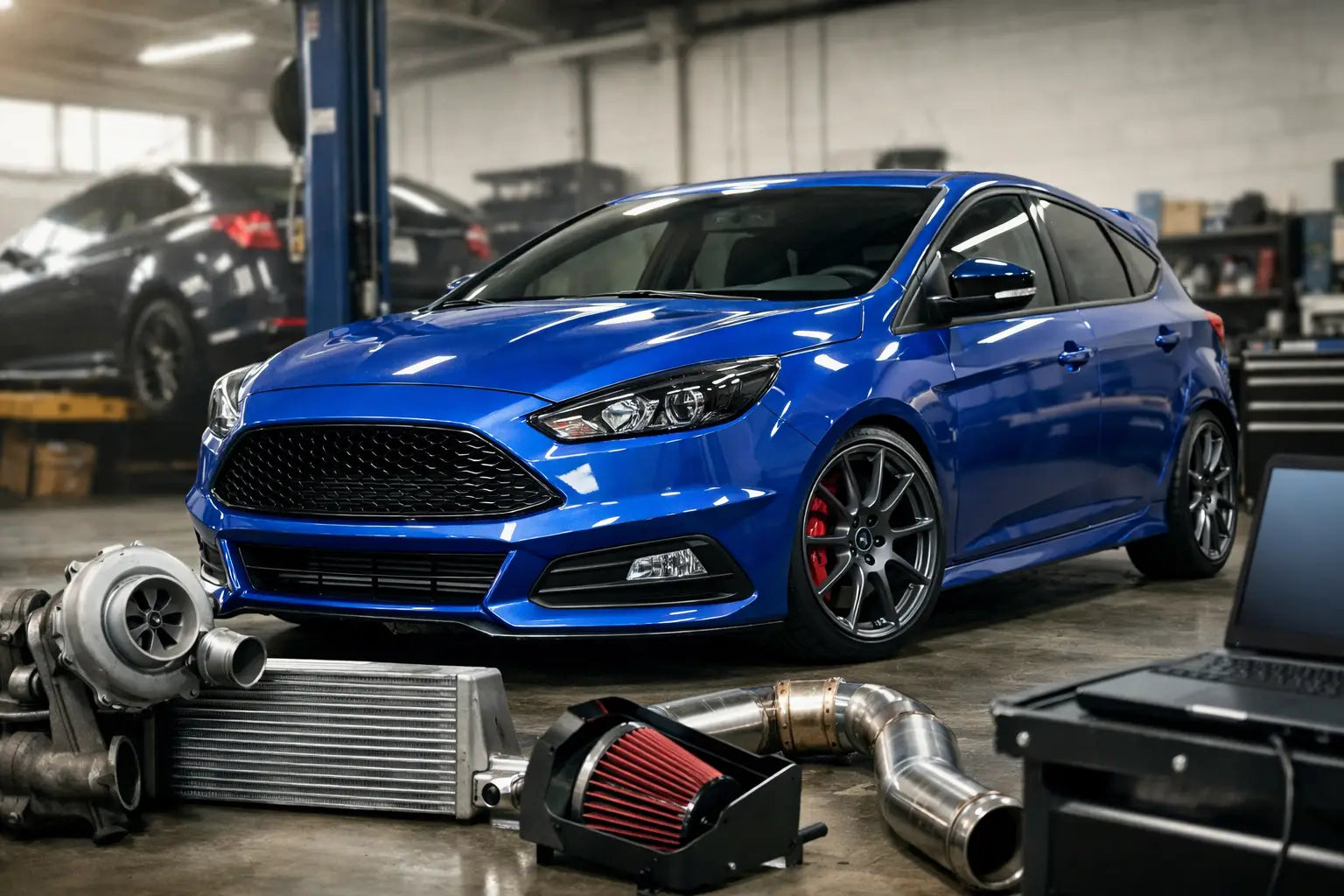
More boost is the easy part. Building a Ford ST that feels sharper, pulls harder and stays reliable after repeated hard use is where the real work starts. A proper Ford ST tuning guide is not about chasing the biggest dyno figure for a screenshot. It is about matching parts, calibration and chassis setup so the car works as one package.
That matters whether you are running a Fiesta ST or Focus ST, using it as a fast-road car, weekend B-road weapon or occasional track-day build. The best STs are not always the loudest or the most expensive. They are the ones with a clear plan behind them.
Ford ST tuning guide - start with the right goal
Before you buy a single part, decide what the car needs to do. Fast road, track-day use and show-focused builds all pull the setup in different directions. A daily-driven Fiesta ST on UK roads needs usable torque, stable intake temperatures and suspension that can control the car without turning every commute into a punishment. A more serious Focus ST track build may accept extra noise, firmer damping and more aggressive brake hardware.
This is where many builds go off course. Owners throw parts at the car because each upgrade looks good in isolation. Then the result is a car with too much low-down torque for the front tyres, a harsh ride, heat soak after a few hard pulls, and a map that asks more from the hardware than the hardware can consistently deliver.
A strong ST build is always balanced. Power matters, but response, traction, braking confidence and temperature control matter just as much.
Start with health checks before tuning
No calibration can fix a tired engine, weak ignition system or boost leak. Before moving into performance upgrades, make sure the platform is healthy. Fresh plugs, correct service items, good coils where relevant, strong vacuum lines, clean filters and no underlying fault codes should be treated as standard practice.
On higher-mileage cars, it is worth paying close attention to intercooler pipework, hoses, mounts and bush wear. If the car is already moving around under load or struggling to put standard power down cleanly, adding more torque is only going to expose those weaknesses faster.
This stage is not glamorous, but it protects your budget. The quickest way to waste money is to tune around neglected maintenance.
Stage 1 is where most ST owners should begin
For many owners, Stage 1 is the sweet spot. A quality remap on a healthy car can deliver a much stronger mid-range, faster spool and a more urgent feel without turning the car into a compromise. On turbocharged ST platforms, this is often the biggest grin-per-pound upgrade available.
That said, not all Stage 1 files are equal. A strong calibration should be written around safe air-fuel ratios, sensible torque delivery and repeatable performance, not one headline number. A map that hits hard for one run but then pulls timing once heat builds is not a serious upgrade.
If your car is used hard, supporting hardware quickly becomes relevant even at this level. Intake temperatures, fuelling headroom and exhaust flow all play into how consistent the car feels when you stop doing short pulls and start driving it properly.
Intake, intercooler and exhaust - the real supporting cast
This is where a lot of ST builds start to come alive. A better intake can improve induction sound and airflow, but on its own it is rarely the magic fix some owners expect. The gains usually make more sense as part of a package.
An uprated intercooler is often one of the smartest modifications on a tuned ST. Factory cooling can become a bottleneck once boost is raised, especially during warmer weather or repeated hard use. Lower, more stable intake temperatures help the car feel consistent rather than brilliant once and flat the next time you lean on it.
Exhaust upgrades depend on your target. A cat-back system can improve sound and reduce restriction, while a sports cat or performance downpipe tends to have a more noticeable effect once combined with mapping. The trade-off is obvious - more flow usually means more noise, and some setups can introduce drone that gets old quickly on longer runs.
For a fast-road car, the best result is often a system that gives the ST more edge without making every motorway journey feel like a compromise.
The chassis deserves as much attention as the engine
An ST with more power and a weak chassis setup will feel impressive for about ten minutes. Then you start fighting torque steer, wheel hop, front-end wash and brakes that lose confidence as temperatures rise.
Suspension upgrades should be chosen with restraint. Lowering springs can sharpen the stance and reduce roll, but damping quality matters more than ride height alone. A proper spring and damper package, or a well-developed coilover setup, usually gives a better result than chasing the lowest possible stance.
Bushes, top mounts and alignment are often undervalued. A precise alignment setup can transform how the car turns in, how stable it feels under braking and how effectively it puts power down on corner exit. For front-wheel-drive ST models, that matters enormously.
If you are increasing output, a limited-slip differential is one of the most meaningful upgrades available. It helps the car deploy power earlier and more cleanly, especially on uneven or damp roads where an open differential simply wastes the gain in torque.
Brakes are not optional on a tuned ST
Speed without repeatable stopping power is amateur hour. A lot of ST owners add power first and leave the braking system until the car starts frightening them. The smarter route is to build braking confidence as the car gets quicker.
For many fast-road builds, quality discs, performance pads and high-temperature brake fluid are enough to transform the pedal feel and consistency. For heavier use, better cooling and more serious hardware may be worth the jump. The right setup depends on vehicle weight, tyre choice and how hard the car is driven.
There is always a trade-off. More aggressive pads can dust more, squeal at low speed and feel less refined when cold. That does not make them wrong. It just means the best choice depends on whether the car spends most of its life on the road or attacking sessions on circuit.
Tyres make or break the whole package
This is the least exciting part of the build for some owners and one of the most important. You can fit every bolt-on part on the shelf, but if the tyre cannot hold the road, the rest of the setup is leaving performance on the table.
A good performance tyre improves launch, braking, turn-in and confidence in poor weather. It also lets you feel the value of the other upgrades you have already paid for. On a front-wheel-drive ST, tyre quality is not just about speed. It is about making the car usable.
Do not overlook wheel choice either. Lighter wheels can help steering response and reduce unsprung mass, but the real benefit only appears if the wheel and tyre package is matched properly to the car rather than chosen purely for looks.
How far should you push it?
There is a point where the next gain costs more and gives less back. Stage 2 and beyond can make an ST seriously quick, but the supporting demands rise with it. More boost and airflow can mean a stronger clutch, better fuelling, stricter heat management and closer attention to engine limits.
That does not mean bigger builds are a bad idea. It means they need honesty. If the goal is a rapid, dependable fast-road car, there is no shame in stopping at a well-sorted setup that feels brilliant every day. If the goal is chasing bigger numbers, go in with open eyes and build the car to handle the load properly.
The strongest builds are rarely accidental. They come from choosing parts with a clear purpose, using components designed to work under pressure, and avoiding the cheap-fix mindset that usually costs more in the long run. That is why specialist, platform-led parts matter. Serious Ford performance upgrades should do more than fill space in the engine bay. They should improve the way the car drives, resists heat, carries speed and responds under real load.
A Ford ST is already a strong base. Tuned properly, it becomes something far more focused - quicker where it counts, sharper on turn-in, and more confidence-inspiring when the road opens up. Build with intent, not impulse, and the car will reward you every time you get behind the wheel.
Share:
Focus ST induction kit review: worth it?
Best Ford RS Upgrades That Make Sense