
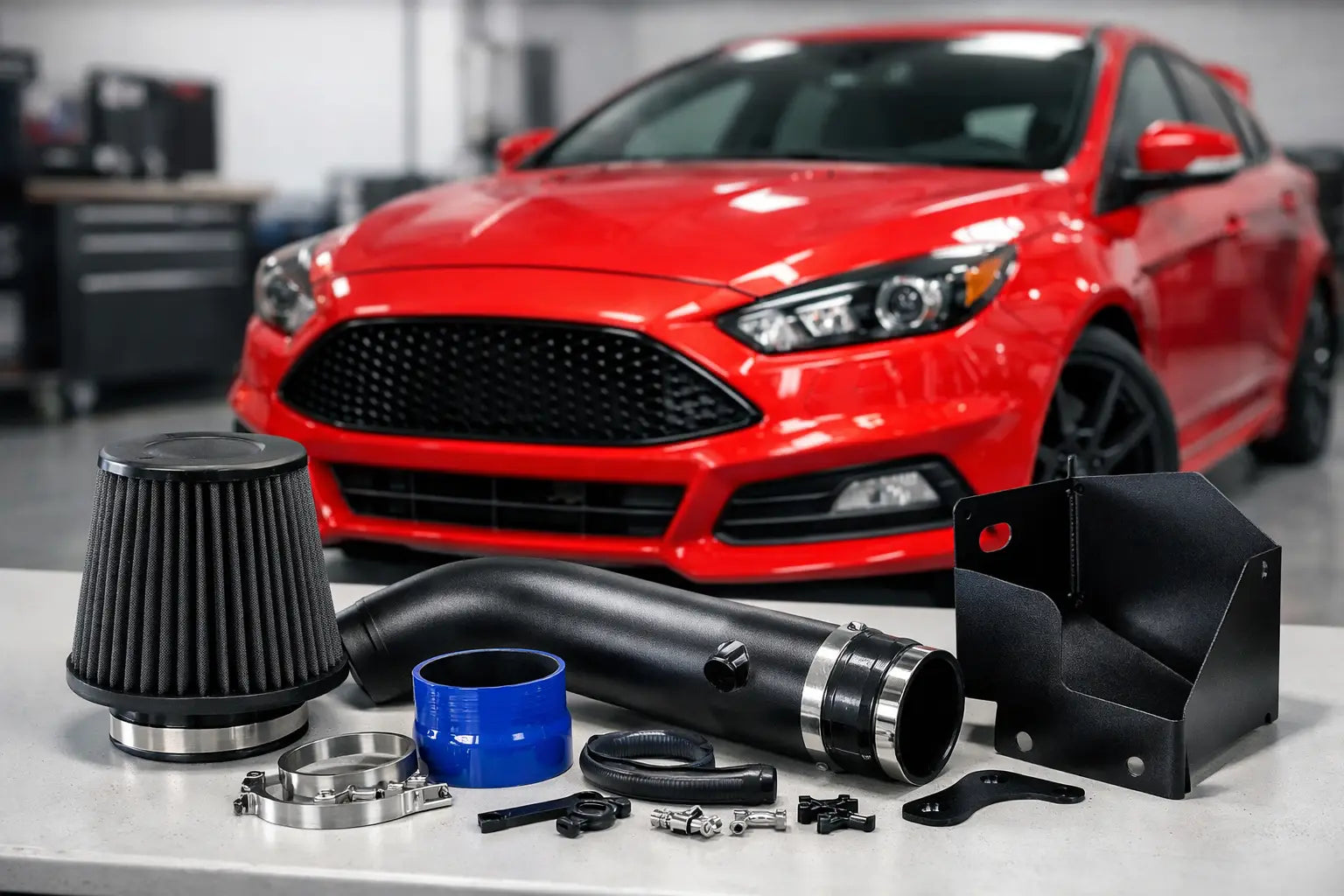
If your ST still feels slightly muted on boost, the factory intake is usually one of the first places to look. A Ford ST induction kit upgrade is not just about extra noise for the sake of it - done properly, it sharpens throttle response, improves airflow, and gives the car the harder-edged character most owners expected from day one.
That matters whether you run a Fiesta ST or Focus ST on the road, on occasional track days, or as part of a bigger tuning package. The right induction kit can help the engine breathe more efficiently, support future power upgrades, and make the whole driving experience feel more alert. The wrong one can leave you with heat soak, poor fitment, annoying drone, or gains that only exist on a product page.
Why a Ford ST induction kit upgrade makes sense
Ford built the ST platform to be fast, usable, and emissions-compliant. That means the original intake system has to balance cost, refinement, packaging, and noise regulations. For a standard daily driver, that compromise works. For an enthusiast build, it is often the point where airflow starts to lag behind the rest of the car.
An upgraded induction kit typically replaces the restrictive airbox, intake pipework, filter arrangement, or all three. On turbocharged ST models, that can reduce resistance before the turbo, helping it pull air with less effort. The result is often a crisper response when you get back on the throttle and a stronger sense of urgency through the mid-range.
You will also notice the soundtrack. Turbo flutter, induction roar, and a more pronounced spool are part of the appeal. On an ST, that change can make the car feel more motorsport-focused without touching the exhaust. For many owners, that is reason enough.
What actually changes after the upgrade
The biggest mistake is expecting a night-and-day power jump from an induction kit alone. On a completely standard car, the gains can be modest. What you feel more often is improved response, better top-end breathing, and a more eager character under load.
On mapped cars or setups already running supporting hardware such as an uprated intercooler, charge pipes, or exhaust, the intake becomes more important. Once boost and fuelling are pushed harder, clean and consistent airflow matters more. In that context, the induction kit stops being a cosmetic extra and starts acting like a proper supporting modification.
Heat management plays a part too. A well-designed enclosed system or a kit with proper shielding can help keep intake temperatures under control compared with an open filter sitting in hot engine bay air. That does not mean every closed kit is automatically better, but it does mean design matters far more than marketing claims.
Open cone or enclosed airbox?
This is where it depends on how you use the car.
An open cone setup usually delivers the most aggressive induction noise. It is a favourite for drivers who want the ST to sound sharper and feel more alive on the road. If the kit is well engineered and positioned properly, it can work very well. If it is poorly shielded, it can draw in warm air when the car is stationary or moving slowly, which is less than ideal in traffic or during repeated hard runs.
An enclosed airbox-style kit tends to suit owners chasing consistency. By sealing the filter and directing cold air from outside the engine bay, it usually offers better thermal control and a cleaner OEM-plus finish. On road and track builds, that balance can make more sense than chasing maximum noise.
There is no universal winner. If your ST is mainly a weekend car and you want every lift-off and spool sound amplified, an open kit may suit you. If you want a tidier engine bay, steadier performance, and a more engineered solution, an enclosed setup is often the stronger choice.
Fitment matters more than headline claims
ST owners know that not all aftermarket parts are created equal. A badly designed intake can cause more irritation than excitement. Poor bracket alignment, pipework that rubs, low-grade couplers, weak clamps, or filters sitting awkwardly in the bay all point to a kit that was built to sell quickly rather than perform properly.
Good fitment matters because movement, vibration, and heat are constant factors in a turbocharged engine bay. A quality kit should mount securely, route cleanly, and work with the car’s existing sensors and surrounding hardware without drama. It should also look like it belongs there.
That is why platform-specific engineering is worth paying for. A proper ST induction setup should not feel universal. It should feel designed around that exact engine bay, with thought given to airflow path, clearance, and repeatable installation.
Is a Ford ST induction kit upgrade worth it on a standard car?
Yes, if your expectations are realistic.
If you want massive bhp gains from a single bolt-on, this is not usually the first mod that transforms the car on its own. If you want better throttle feel, stronger induction sound, and a cleaner foundation for future tuning, it is absolutely worthwhile. It is one of the few upgrades you notice almost every time you drive.
For standard road cars, the biggest return is often the driving feel rather than dyno numbers. The ST feels less restrained. It responds more sharply. It sounds like a proper performance hatch should. For many owners, that is exactly the point.
When the upgrade becomes more important
Once you move beyond light modifications, intake performance starts to matter more. A remap increases demand. An upgraded turbo increases demand even further. If the engine is trying to pull more air through restrictive original components, you are leaving efficiency on the table.
That does not mean every tuned ST needs the biggest intake on the market. It means the induction kit should match the rest of the build. A lightly mapped fast-road car may only need a well-designed intake and panel or cone filter setup. A higher-output build with supporting hardware should use an intake system proven to cope with greater airflow and sustained heat.
This is where buying parts as a package makes sense. The best-performing cars are usually built with a clear plan, not a random stack of upgrades added over twelve months.
What to check before you buy
Look beyond glossy photos and peak power claims. Check whether the kit is intended for your exact ST model and engine variant. Fiesta ST and Focus ST setups differ, and even within a model range there can be changes that affect fitment.
Pay attention to filter placement, heat shielding, pipe diameter, and material quality. Aluminium and high-grade silicone are common for a reason - they cope well with heat and pressure while keeping the installation secure. Also consider maintenance. A reusable performance filter is useful, but only if it is easy to access and service.
If your car is used hard, ask the practical questions. Will the kit stay consistent after repeated pulls? Does it draw cold air effectively? Is it likely to trigger sensor issues or throw up unwanted headaches after installation? Serious upgrades should reduce compromise, not create it.
Road car, track car, or show-and-go build?
Your answer should shape the choice.
For a daily-driven ST, a refined enclosed kit often gives the best balance of sound, usability, and temperature control. For a weekend toy, an open cone setup may deliver the theatre you want every time you lean on the throttle. For track use, consistency becomes the key factor. Noise is secondary to airflow stability and heat resistance when the car is being pushed hard for session after session.
And if appearance matters - which it does for plenty of owners - the induction kit should still earn its place mechanically. A clean engine bay with quality pipework, carbon detailing, or motorsport-inspired finishes is part of the appeal, but looks alone are never enough on a proper ST build.
At 150 Performance, that is the difference between a part that merely fills space and one that genuinely adds to the car.
The best upgrade is the one that suits the build
There is no single best induction kit for every Ford ST owner. There is only the right kit for your car, your power goals, and the way you drive it. Chasing the loudest option is easy. Choosing a setup with proper airflow, fitment, and thermal control is what gives you a result that still feels right six months later.
A strong ST build is all about balance. When the intake, mapping, cooling, and exhaust work together, the car feels sharper, faster, and more complete. Start with parts that are engineered properly, and the rest of the build has a far better foundation to work from.
If you are planning your next mod, make it one that changes the way the car breathes and the way it feels from behind the wheel. That is where the fun starts.
Share:
Mustang Aero Parts That Actually Work
Best Focus ST Handling Upgrades