
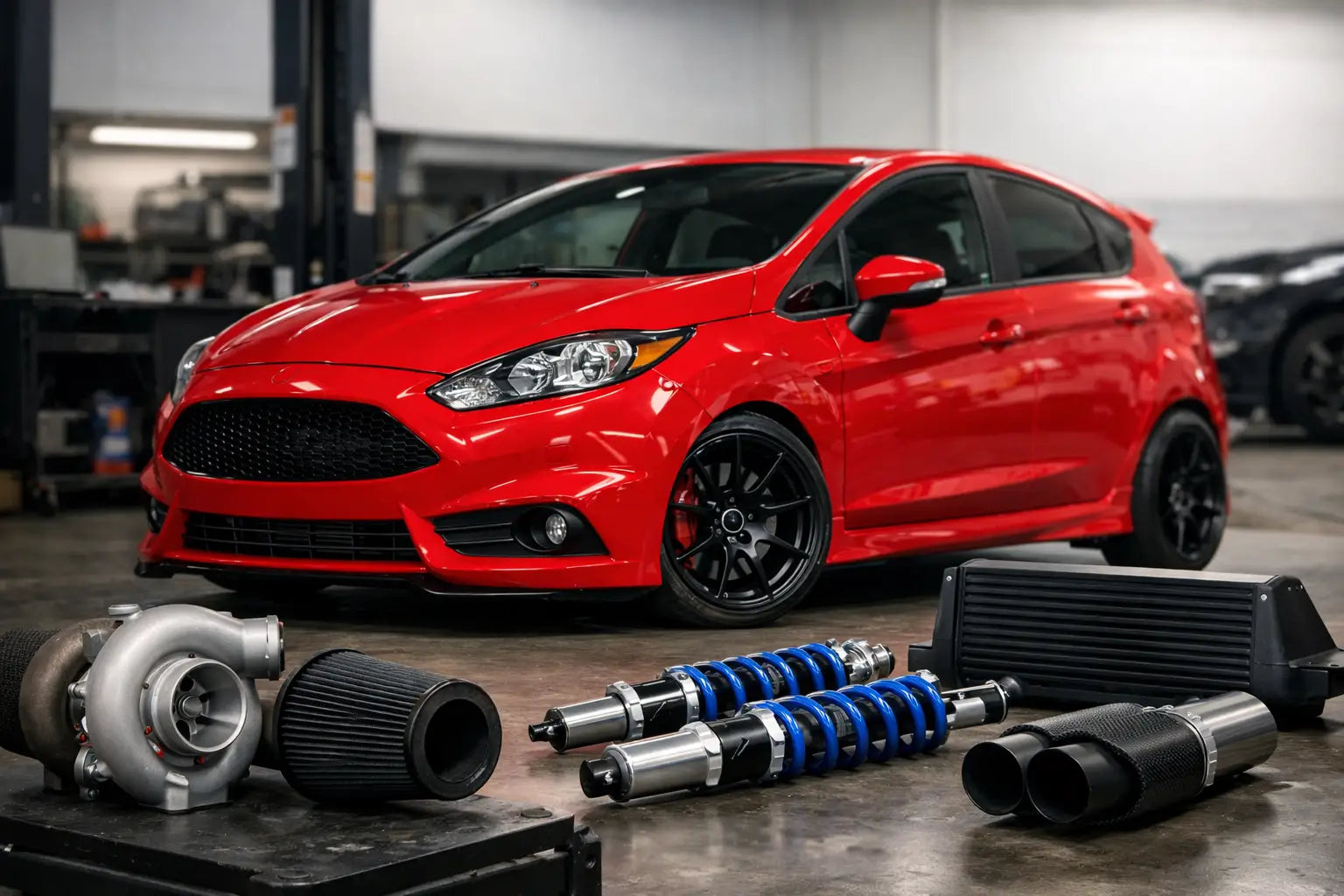
The quickest way to waste money on a Fiesta ST is to chase peak numbers before fixing the car’s weak points. The best Ford Fiesta ST upgrades are the ones that make the car faster, sharper and more dependable as a complete package - not just louder on a spec sheet.
That matters because the Fiesta ST is already a seriously capable platform. It turns in hard, carries speed well and rewards commitment, whether you use it on a B-road blast, a Sunday run or regular track days. But like any hot hatch with a huge aftermarket, the results depend on the order you build it in. Get that right and the car feels factory-plus. Get it wrong and you end up with a compromised setup that is tiring on the road and inconsistent when pushed.
Where Ford Fiesta ST upgrades make the biggest difference
If you want genuine performance, start with the areas that affect confidence behind the wheel. On the Fiesta ST, that usually means chassis, braking and thermal control before chasing major power. A modestly tuned car with the right suspension, tyres and brake package will often feel much quicker than a more powerful car that cannot put its power down.
This is where a lot of owners split into two camps. One wants a fast road build with better response, cleaner styling and a stronger soundtrack. The other wants a more focused setup with repeatable lap pace and higher temperature tolerance. Both are valid, but the parts you choose should match the job. There is no point fitting an aggressive track-biased setup if the car spends most of its life on rough roads and commuting.
Start with tyres and alignment
It is not the most glamorous money you will spend, but tyres and geometry change the Fiesta ST more than most owners expect. A quality performance tyre gives you better front-end bite, stronger traction out of slower corners and more confidence under heavy braking. Pair that with a proper alignment and the car becomes more precise immediately.
A lot of modified cars are let down by poor setup. Even excellent hardware will feel average if toe and camber are not dialled in for how the car is driven. For fast road use, a slightly more aggressive front-end setup can wake the steering up without making the car nervous. For track work, the balance shifts again. More front camber usually helps preserve the outside shoulder of the tyre and keeps the car consistent over a session.
Suspension should suit the road, not just the advert
Suspension is one of the most popular Ford Fiesta ST upgrades, and also one of the easiest to get wrong. Lower is not automatically better. Extra stiffness is not automatically faster. What you want is control - better body management, improved response and a car that stays settled when the surface is less than perfect.
A well-matched spring and damper package can sharpen direction changes and reduce float without ruining the car on broken tarmac. Coilovers make sense if you want ride height adjustment and more control over damping, but they are not always the best answer for every owner. On a road car, overly stiff coilovers can actually reduce confidence because the tyres spend less time properly loaded over rough surfaces.
The smart move is to think about where the car lives. Smooth circuit days and occasional dry-weather drives leave room for a firmer setup. Daily road miles in Britain, with all the cambers, patches and potholes that come with them, usually call for more compliance.
Power upgrades for the Fiesta ST
The Fiesta ST responds well to tuning, which is exactly why owners are tempted to jump straight into intake, intercooler, exhaust and software. Done properly, that route delivers a car that feels stronger across the mid-range and far more eager when you lean on it. Done badly, it creates heat soak, torque spikes and a car that feels exciting for one pull and flat after that.
Intake, intercooler and mapping
A quality intake can improve response and let the turbo breathe more freely, but the real value is in building a package rather than treating parts in isolation. The intercooler is a prime example. On a tuned Fiesta ST, charge temperatures matter. Once intake temperatures climb, consistency disappears and performance drops away.
A larger, efficient intercooler helps the car maintain power when worked hard, especially in warmer conditions or during repeated runs. Add a well-developed calibration and the result is not just more power, but cleaner delivery. That matters more than a headline figure. A smooth, predictable tune is easier to use and usually quicker in the real world.
Exhaust upgrades sit in a similar place. Yes, you get more character, better flow and a more purposeful note, but the best systems are engineered to reduce restriction without introducing drone that becomes wearing on motorway runs. There is always a trade-off. Some owners want theatre. Others want a discreet system that still performs. Neither is wrong, but it is worth being honest with yourself before buying.
Big power needs supporting hardware
If your target moves beyond a mild stage setup, supporting modifications stop being optional. Clutch strength, cooling capacity and fuelling become more relevant as torque rises. That is where many builds start to separate into serious projects rather than lightly modified road cars.
This is also the point where restraint becomes valuable. The Fiesta ST is a light, lively platform. It does not need huge figures to be entertaining. A well-sorted car with sensible power, strong braking and a planted chassis often delivers a more enjoyable drive than a dyno-chasing build that overwhelms the front axle.
Brakes - the upgrade you feel every time
Ask anyone who drives their Fiesta ST properly and they will tell you the same thing: good brakes change the whole car. The standard setup is capable, but once pace increases or sessions get longer, pad choice, fluid quality and temperature management become far more important.
For many owners, the sweet spot is upgraded pads, braided lines and high-quality brake fluid. That package improves pedal feel, gives more confidence under repeated hard stops and stands up far better to enthusiastic use. If the car sees regular circuit work, a more serious disc and pad combination can make sense, but not everyone needs to jump straight to the biggest possible setup.
Brake feel is personal. Some drivers want immediate bite. Others prefer a more progressive pedal that is easier to modulate on the road. Again, the right answer depends on how the car is used. The best setup is the one that lets you trust the car when you are arriving fast into a corner, not the one with the most aggressive sales pitch.
Don’t ignore stiffness, bushings and driveline control
Some of the most effective Ford Fiesta ST upgrades are the ones people notice only after driving the car back to back. Uprated engine mounts, selected suspension bushes and chassis bracing can make the car feel tighter, more direct and better connected under load.
There is a clear benefit here, especially on tuned cars where extra torque can expose drivetrain movement. A stronger rear motor mount, for example, often improves shift feel and throttle response because the drivetrain moves less when loaded. The downside is equally real: more vibration and harshness. For some owners that extra edge feels motorsport-inspired. For others it gets old quickly.
Bushes are similar. They can sharpen response and improve consistency, but the harder you go, the more noise and harshness you invite into the cabin. On a road-led build, selective upgrades usually work better than replacing everything with the hardest option available.
Styling upgrades should still earn their place
The Fiesta ST has always responded well to visual upgrades, but the strongest builds keep a clear line between engineered styling and bolt-on clutter. Carbon fibre parts, aero additions and exterior trim upgrades work best when fitment, finish and function are taken seriously.
That means panel quality, weave consistency and proper development matter. A front splitter or rear spoiler extension should suit the shape of the car and feel intentional, not like an afterthought. Weight reduction is a bonus where it is genuine, but most owners are also buying presence. There is nothing wrong with that. A performance car should look like it means business.
This is where specialist, platform-led parts stand apart from generic accessories. Precision fitment and proper design are not marketing fluff when you are working with a car people know well. Fiesta ST owners spot poor-quality parts immediately.
Build in stages, not in a rush
The strongest Fiesta ST builds usually follow a sequence. Sort the tyres, alignment and brakes. Improve suspension based on actual use. Add cooling and a quality tune when you are ready for more power. Then refine the car with driveline, styling and detail upgrades that support the bigger picture.
That approach saves money and usually produces a better car. It also gives you time to understand each change. One of the biggest mistakes owners make is fitting too many parts at once, then trying to work out why the car feels odd. Build progressively and the results are easier to judge.
At 150 Performance, that engineering-first mindset is what separates a serious upgrade path from a basket full of random parts. The Fiesta ST is too good a platform to modify blindly.
If you want the car to feel faster, don’t just chase more. Chase balance. That is the difference between a Fiesta ST that looks modified and one that genuinely delivers every time you drive it.
Share:
Ford ST Upgrade Guide for Fast Road Builds
10 Best Mods for Mustang GT Owners