
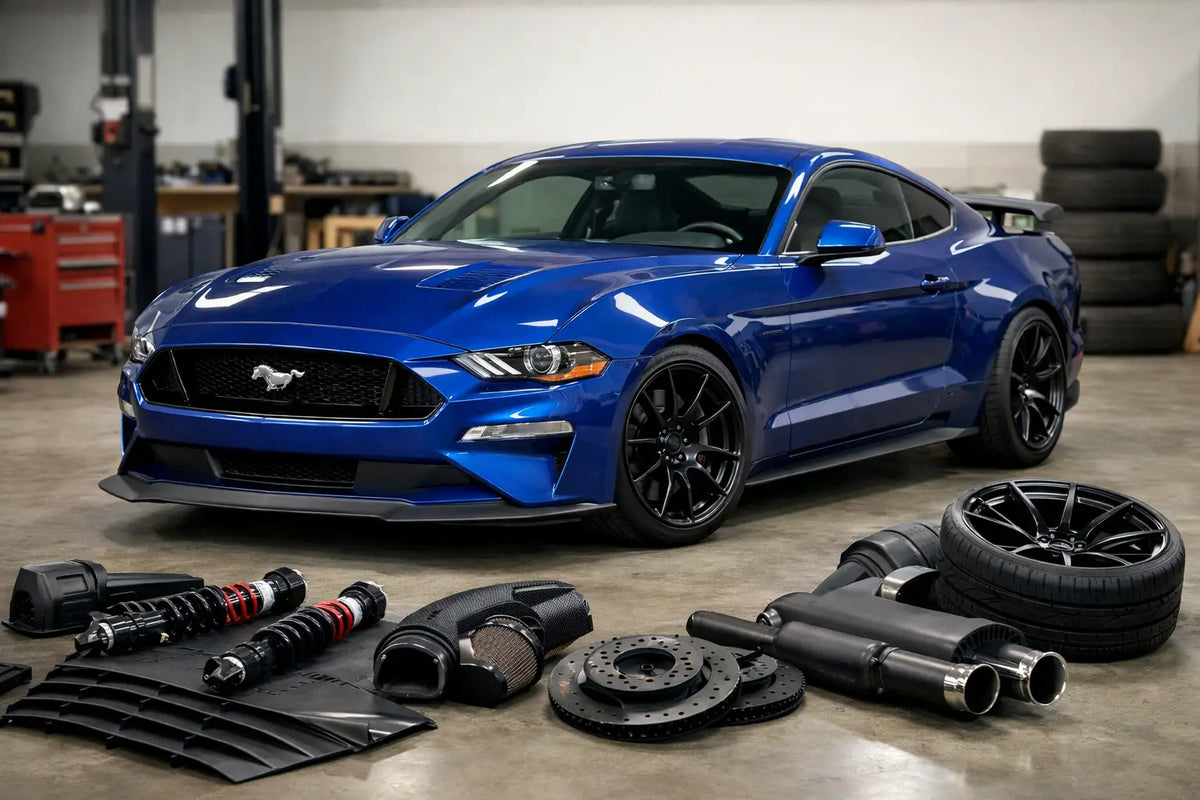
The right Mustang GT build is never about bolting on random parts and hoping for the best. The best mods for Mustang GT owners are the ones that suit how the car is actually used - fast road, weekend blasts, drag strip runs or proper track work - and improve the car as a package rather than chasing one big headline number.
A modern Mustang GT already brings strong V8 performance, rear-wheel-drive balance and serious presence out of the box. That also means every modification has a clear job to do. Some upgrades sharpen response, some improve consistency under hard use, and some transform the way the car looks and sounds. The smart approach is choosing parts with genuine engineering behind them, proper fitment, and a result you can feel from the driver’s seat.
Best mods for Mustang GT: start with the foundation
Most owners want to begin with power, and that is understandable. But if your GT still sits on soft factory suspension, breathes through a restrictive exhaust and struggles to put power down cleanly, adding more output too early can leave the car feeling less polished rather than more serious.
The strongest builds usually start with airflow, chassis control and grip. Get those right and every future upgrade works harder. That is especially true if the car sees enthusiastic road driving or repeated hard laps, where heat management, braking confidence and consistency matter more than one heroic dyno graph.
1. Cat-back exhaust
If there is one modification that changes the character of a Mustang GT immediately, it is the exhaust. A quality cat-back system gives the Coyote V8 the voice it should have had from the factory - deeper at idle, harder under load, and sharper through the upper rev range.
There is more to it than noise. A well-designed exhaust can reduce back pressure, trim weight and improve throttle response. The trade-off is obvious: some systems are brilliant on a B-road but tiring on long motorway journeys, particularly if they drone at cruising speeds. Valved options or more refined rear sections can be the better call if the car is driven daily.
2. Cold air intake and induction upgrades
An intake upgrade is one of the most popular first steps for good reason. Done properly, it improves airflow, sharpens induction sound and can support future tuning. On the Mustang GT, it often adds that extra edge to throttle response that makes the car feel more alive in the mid-range.
The key word is properly. Not every intake on the market is engineered to the same standard, and poor heat shielding or questionable MAF scaling can create more problems than performance. If you are planning a remap later, choose an intake that is known to work cleanly within that setup.
3. ECU tuning
Once the hardware starts to improve airflow, an ECU calibration brings everything together. A good tune can sharpen throttle mapping, optimise fuelling and ignition, and extract stronger gains from intake and exhaust modifications.
This is where context matters. A naturally aspirated Mustang GT will not suddenly become a different species from a basic remap alone, but it can become crisper, more responsive and better matched to supporting parts. The downside is that tuning quality varies massively, and the cheapest option is rarely the safest. For hard-driven cars, reliability is part of performance.
Chassis mods that make a Mustang GT feel faster
The Mustang platform responds brilliantly to suspension work. Even a mildly modified car can feel far more precise with the right chassis upgrades, especially if you are trying to reduce body roll, improve front-end bite or make the rear axle feel more settled on poor surfaces.
4. Lowering springs or coilovers
This is one of the most effective changes you can make, visually and dynamically. Lowering springs improve stance and can reduce some of the factory float, while a quality coilover setup gives you far more control over ride height and damping.
For a road car, springs paired with matched dampers often hit the sweet spot. For a dual-purpose car, coilovers offer more adjustability and a more serious setup window. The trade-off is ride quality. Go too stiff or too low and the car can become nervous on British roads, which ruins confidence rather than building it.
5. Anti-roll bars and chassis bracing
If you want flatter cornering and better transition response, anti-roll bars are worth serious attention. They can help the Mustang turn in harder and stay more composed when loaded up through faster bends.
Chassis bracing and suspension alignment upgrades also deserve more credit than they usually get. Not every improvement needs to be dramatic or visible. Sometimes the best result comes from reducing unwanted movement and making the car more predictable. That matters on track, but it also matters on a quick back-road drive where confidence is everything.
6. Wheels and tyres
This is where performance meets common sense. A lighter wheel and a genuinely capable tyre package can transform acceleration feel, steering response, braking traction and cornering grip in one move.
The mistake many owners make is chasing looks alone. Oversized wheels and bargain tyres can make the car feel worse, not better. If you are serious about the best mods for Mustang GT performance, tyres belong near the top of the list. They are the final connection between every expensive upgrade and the road.
Don’t ignore stopping power
7. Performance brake pads, discs and lines
A Mustang GT with more speed and more grip needs brakes that can cope. For fast road use, a quality pad upgrade can make a huge difference to initial bite and heat resistance. For repeated hard use, uprated discs, braided lines and proper fluid become increasingly important.
This is not the most glamorous category, but it is one of the smartest. Factory brakes may feel acceptable on a casual drive, then start to fade when the pace rises. If your build includes power, suspension and sticky tyres, stronger braking is not optional - it is balance.
Brake upgrades do come with compromises. More aggressive pads can dust more, squeal at low speed and feel overkill in normal traffic. That does not make them wrong, just use-case specific.
Visual mods that still respect the engineering
Mustang owners care about presence. Fair enough. The car has it in standard form, and the right styling upgrades can push it further without crossing into cheap-looking territory. The difference is whether the part looks engineered for the car or simply attached to it.
8. Carbon fibre exterior parts
A well-made carbon splitter, spoiler, side skirt or rear diffuser gives the GT a sharper, more motorsport-led finish. On some parts, there is also a weight-saving benefit, though on most road builds the visual and aerodynamic effect is the bigger draw.
Fitment is everything here. Cheap carbon with poor weave quality or inconsistent mounting points can ruin the look of an otherwise strong build. This is where specialist suppliers stand apart from generic catalogue sellers. Precision matters, especially when the whole point is to make the car look more serious, not more cluttered.
9. Grilles, lighting and aero details
Subtle changes at the front and rear can modernise the car quickly. A more aggressive grille design, cleaner lighting elements or functional aero touches can make the GT look lower, wider and more purposeful.
The trick is restraint. Too many styling mods layered together can make the car appear busy. The strongest builds usually pick a theme and stick to it - road-focused, track-inspired or show-and-go - then choose parts that support that identity.
If big power is the goal
10. Supercharger kits and supporting hardware
For owners chasing a major jump in output, forced induction is where the Mustang GT becomes a very different machine. A properly developed supercharger setup can deliver the kind of straight-line pace that completely resets your idea of what the car can do.
It is also where costs rise quickly. Once boost enters the conversation, fuel system upgrades, cooling, drivetrain strength and brake capacity all become more relevant. Big power setups are exciting, but they punish weak links. If the budget only covers the headline kit and not the supporting package, it is better to wait and do it properly.
How to choose the best mods for Mustang GT builds
The strongest route depends on what annoys you most about the standard car. If the factory exhaust feels too muted, start there. If the car moves around too much under load, suspension and alignment should come first. If you want a more aggressive look without sacrificing quality, carbon and aero upgrades make sense.
A fast-road build usually benefits most from an exhaust, intake, tune, tyres and a carefully chosen suspension setup. A track-focused build should prioritise brakes, cooling, wheel and tyre package, chassis setup and seat time before chasing serious power. A styling-led build still needs discipline - buy parts with proper fitment and material quality, not just flashy product photos.
That is where a specialist performance retailer earns its place. A brand like 150 Performance speaks to enthusiasts because the focus is not generic accessories - it is parts that suit the platform, fit properly and bring the car closer to the motorsport edge.
The best Mustang GT builds are never accidental. They come from choosing upgrades that work together, respecting the car’s strengths, and spending money where it changes the driving experience rather than just the spec sheet. Build it with intent, and every drive will remind you why the V8 Mustang still deserves proper attention.
Share:
Best Ford Fiesta ST Upgrades That Matter
Performance Exhaust Buying Guide