
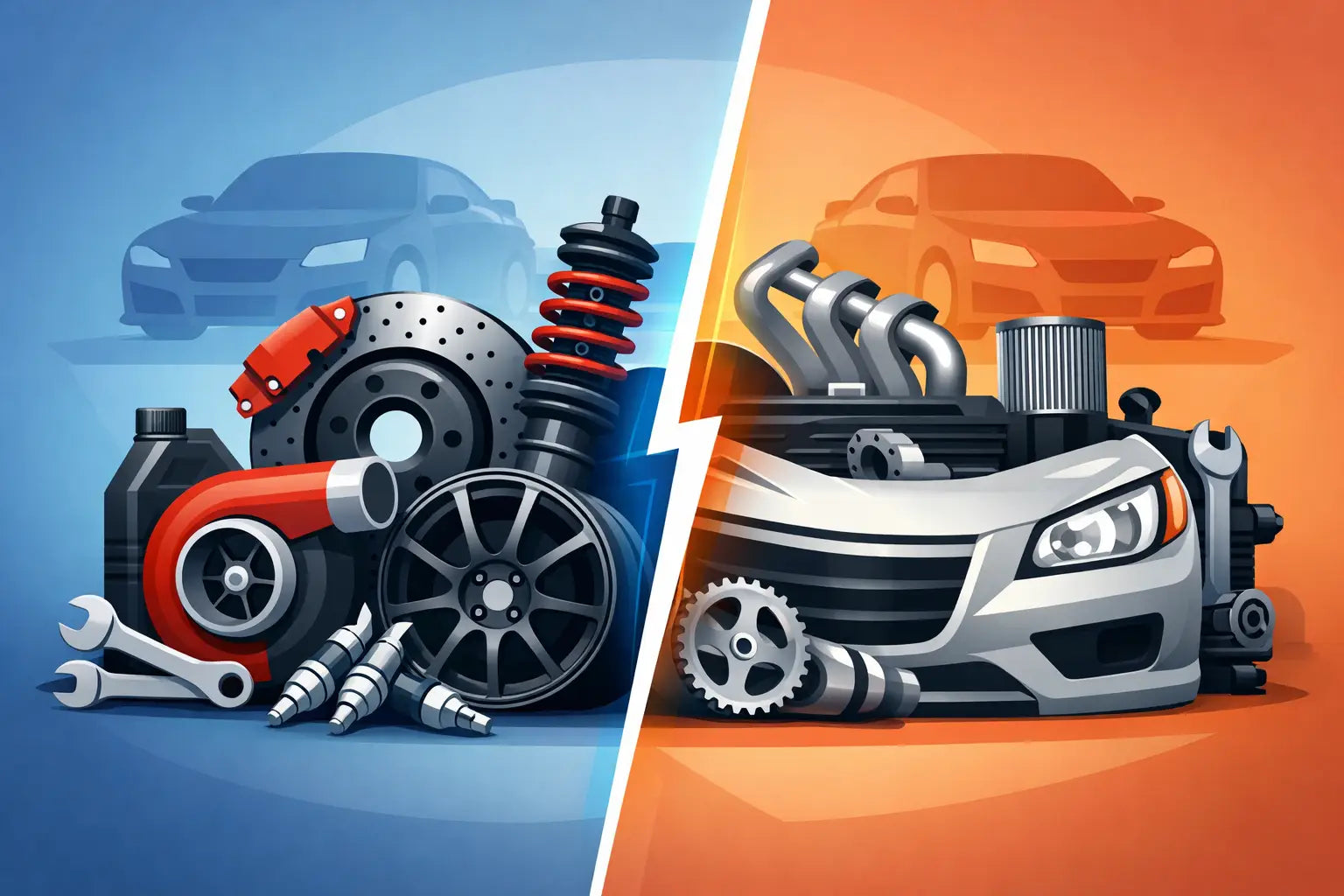
You notice it the moment you start modifying a car properly. The factory part works, but it does not always work for how you drive. That is where the aftermarket parts vs OEM debate gets real - especially if you own a Focus ST, Fiesta ST, Mustang or any performance platform that deserves more than a one-size-fits-all solution.
For some owners, OEM is the safe choice. For others, aftermarket is where the car actually comes alive. The truth is less tribal than the internet makes it sound. If you are building for sharper handling, more power, better thermal control or a more aggressive finish, the right answer depends on the part, the goal and how serious you are about the result.
What aftermarket parts vs OEM actually means
OEM stands for Original Equipment Manufacturer. In simple terms, these are parts made to the same specification as the components your car left the factory with. They are designed around mass production, broad reliability targets, warranty expectations and comfort for the average road driver.
Aftermarket parts are produced by third-party brands outside the original vehicle manufacturer. That can mean almost anything, which is why this category gets misunderstood. Some aftermarket parts are cheaply made copies chasing a low price. Others are properly engineered upgrades developed through CAD design, testing and platform-specific fitment work. Those are two very different worlds.
That distinction matters. Comparing a bargain-bin imitation splitter to a well-developed carbon fibre aero part is like comparing remap files from an unknown seller to a calibration built by a specialist. The label alone does not tell you enough. The design intent does.
OEM parts: where they still make perfect sense
OEM parts earn their reputation for a reason. They are predictable, consistent and usually straightforward to fit. If your priority is restoring the car to factory condition, protecting a manufacturer warranty or keeping a daily driver exactly as intended, OEM can be the smart play.
For routine maintenance items, sensors in some cases, trim pieces and components where factory integration matters more than outright performance, OEM often removes guesswork. You know the tolerances should be right. You know the part was designed around the vehicle’s original systems. That peace of mind has value.
There is also the resale angle. Some buyers prefer a car that has stayed close to standard, particularly on newer models or prestige platforms where originality still carries weight. If you are planning to move the car on soon, fitting OEM parts can make the sales conversation simpler.
But OEM has limits, and enthusiasts usually find them quickly. Factory parts are built around compromise. Noise regulations, production cost, emissions targets, comfort and durability across a huge range of drivers all shape the final result. That is fine for commuting. It is not always fine for fast road use or track work.
Where aftermarket parts pull ahead
The best aftermarket parts exist because OEM parts are not designed to do everything. A factory intercooler may be adequate on the road but struggle with repeated heat cycles on track. A standard exhaust may be civilised but restrictive. Factory suspension may suit rough roads and broad customer expectations, yet leave plenty on the table for body control and turn-in.
This is where quality aftermarket parts start to justify themselves. They are often designed to solve a specific weakness or push a platform beyond factory intent. Better airflow, less weight, stronger materials, improved brake feel, tighter chassis response and more purposeful styling are all common gains when the part has been engineered properly.
For performance builds, aftermarket can also offer more choice. OEM gives you one answer. The aftermarket gives you options based on how you use the car. Fast road. Track day. Show build. Lightweight carbon transformation. Hybrid use. Different goals need different hardware.
That flexibility is a major advantage if you actually understand your build direction. A Mustang used for weekend blasts needs a different setup from a Focus RS seeing regular circuit use. The right aftermarket brand will design around those differences instead of pretending one part suits everyone.
Aftermarket parts vs OEM on fit and finish
Fitment is where bad aftermarket parts give the whole category a headache. Everyone has seen it - poor panel gaps, awkward mounting points, exhausts that sit crooked, carbon weave that looks rushed and suspension parts that promise a lot but feel crude once fitted.
That is not an aftermarket problem. It is a bad engineering problem.
High-quality aftermarket parts can match or even exceed OEM standards in the areas that matter to enthusiasts. Precision-manufactured exhaust systems, properly developed intake kits and vehicle-specific carbon fibre parts can transform a car without feeling like an afterthought. The key is whether the part was genuinely developed for the platform or simply adapted to fit.
This is especially important with aerodynamic and carbon components. A premium carbon fibre bonnet vent, spoiler or front lip should not just look dramatic in photos. It should follow the car’s lines properly, mount securely and maintain the level of finish expected on a serious build. If the fit is poor, the part is not premium no matter how expensive it was.
Cost is not as simple as it looks
A lot of people reduce the aftermarket parts vs OEM question to price. OEM is expensive. Aftermarket is cheaper. Sometimes that is true, but often it is not.
Some aftermarket parts cost less because they cut corners in materials, tooling or testing. Others cost more than OEM because they deliver a genuine upgrade in design, construction and performance. Titanium exhaust systems, motorsport-grade brake components and properly developed carbon parts are not cheap because they are not meant to be.
The better question is value. What are you paying for, and what are you trying to achieve?
If your factory airbox needs replacing and you only want standard operation, an OEM part may be better value than a random open cone setup that adds noise and little else. But if you are chasing lower intake temperatures, improved airflow and supporting mods for a mapped car, a proven aftermarket intake may make far more sense.
Cheap parts usually become expensive twice - once when you buy them, and again when you replace them with something better.
Reliability depends on the part and the brand
There is a lazy assumption that OEM always means reliable and aftermarket always means risky. Real-world ownership is more nuanced.
Factory parts are reliable within the use case they were designed for. Push beyond that use case and their weaknesses show up. Track sessions expose cooling limitations. Added power exposes weak clamps, hoses or mounts. Hard driving reveals where factory bushings or brakes start to feel soft.
A well-made aftermarket upgrade can improve reliability under those conditions. Better cooling hardware, stronger engine mounts, upgraded fasteners and more capable brake components are often chosen not for headline power, but for consistency when the car is worked hard.
The catch is obvious. Reliability only improves if the part has been engineered, tested and installed correctly. This is why brand reputation matters so much in the performance world. Anyone can list a part online. Not everyone understands platform-specific failure points, tolerances and long-term use.
How to choose between OEM and aftermarket
Start with the job the part needs to do. If you are repairing a daily driver and just want factory operation, OEM may be the cleanest solution. If you are upgrading a performance car for sharper response, stronger presence or repeatable results under load, aftermarket often gives you more headroom.
Next, be honest about how you drive. A car that never sees more than a casual B-road run does not need every race-inspired upgrade available. On the other hand, if you are booking track days, running supporting mods and asking more from the platform, factory parts can become the bottleneck.
Then look at the specific category. Brake pads, suspension, intercoolers, exhausts and carbon aero parts all have different priorities. There is no universal answer. OEM might make sense in one area and hold the build back in another.
Most importantly, buy from specialists who understand your platform. That matters far more than picking a side in some generic OEM-versus-aftermarket argument. A properly curated aftermarket range reflects real enthusiast priorities - fitment, material quality, engineering intent and performance benefit. That is exactly why specialist retailers such as 150 Performance resonate with owners who want more than catalogue filler.
The smart enthusiast view of aftermarket parts vs OEM
The strongest builds rarely rely on ideology. They rely on choosing the right part for the right reason.
OEM is not boring when it solves the problem properly. Aftermarket is not automatically better just because it looks more aggressive or promises bigger numbers. The smart move is knowing when factory quality is enough and when engineered aftermarket hardware will genuinely move the car forward.
For enthusiasts, that usually means being selective. Keep OEM where it protects drivability, integration or originality. Go aftermarket where the factory setup compromises performance, weight, heat management or visual impact. That balance tends to produce the cars people actually enjoy owning - quick, focused and built with intent.
If you are upgrading with a clear goal, the badge on the box matters less than the quality of the engineering behind it. Choose parts that respect the platform, suit the way you drive and add something real every time you get behind the wheel.
Share:
What Are Aftermarket Car Parts?
Are Aftermarket Car Parts Worth It?